People, Planet, and Profit — Business Leaders and Sustainable Economics

United States Capitol

Photo Credit: United States Capitol, Justin A Irving, purposeinleadership.com

Today I had the pleasure of meeting with a group of business and political leaders at the United States Capitol in Washington, DC. Facilitated by The Washington Institute, a group of leaders who are interested in the integration of faith and work gathered to hear insights from key leaders in Washington.

Economics of Mutuality

One of these senior business leaders was Jay Jakub of the Mars Corporation who shared a great deal about the corporation’s thinking on the economics of mutuality. Jakub began by noting that if you want to make money for a year you ask one set of questions, but if you want to make money for 100 years you ask different questions. The 100-year questions revolve around mutuality and sustainability, and challenge the purely profit-driven approach to business rooted in Milton Friedman’s economic theory.

A Triple Bottom Line

To summarize the in-depth presentation we heard, Mars is aggressively piloting and pursuing a Triple Bottom Line approach to business and economics.  While a single bottom line approach is the norm in most business—particularly within publicly traded companies—Mars and other corporations are growing in also taking the bottom line of people and planet seriously as well. Taking profit, planet, and people seriously in the corporate environment means identifying and implementing metrics to measure performance in all three bottom line variables of People, Planet, and Profit.

Triple-Bottom-Line

The Triple Bottom Line & The Economics of Mutuality

Myopic Economics

Economic approaches that isolate only one of these variables will err. A profit-only approach to business burdens people and damages the environment. A planet-only approach to business often is unsustainable because it is not profitable, and because the lack of sustainability will not serve people. A People-only approach sounds helpful, but often lacks environmental consciousness and likely will fail in the long run due to an absence of profitability.

Holistic Economics

The key insight I took away from this interaction with Jay Jakub is to pursue business economics in a holistic manner. Pursuing only one bottom line priority is myopic (People, Planet, OR Profit) and is driven by short term questions in pursuit of short term solutions. In contrast to a myopic and short term approach, pursuing the Triple Bottom Line of People, Planet, and Profit leads to a business economic model that is bearable, equitable, viable, and ultimately sustainable.

I’m hopeful that Mars and many other companies will make a successful transition from the single bottom line to the triple bottom in the next decade. Societal, economic, and human flourishing in our world under God’s care will benefit greatly from such transformation!

Watershed Moments and Leadership Development

Just yesterday I passed a sign along the side of the road that caught my attention.

photo(1)

Photo Credit: Justin A Irving, purposeinleadership.com

The sign indicated a geographic point of separation between the Atlantic and Pacific watersheds in Colorado. Watershed in this sense of the word points us to where water will drain from these mountain tributaries.

Watershed Moments

While this is a literal watershed place, leaders are often faced with figurative watershed moments in their development as leaders. Dictionaries define this sense of watershed in the following manner:

…a time when an important change happens

…a crucial dividing point, line, or factor:  turning point

…a critical turning point in time where everything changes that will never be the same as before

Watershed Moments and the Level 5 Leader

Leadership theorists point to related concepts as they describe how leaders develop. Jim Collins talks about events such as a battle with cancer, changed war orders, or religious conversion as creating a watershed moment for developing “Level 5 Leaders.” Collins explains that such experiences allow the level 5 seed to sprout in their lives. Robert Clinton engages integrity checks developing leaders face in his discussion of leadership emergence theory. These integrity checks are often watershed moments, shaping and defining the character of the developing leader.

Watershed Moments and the Twice-Born Leader

Abraham Zaleznik puts forward what he calls “twice-born” leaders in a 2004 HBR article. Zaleznik points to “once-born” and “twice-born” personalities, and argues that it is twice-born personalities who tend to be leaders. According to Zaleznik, while “once-born” individuals have fairly straightforward and relatively peaceful experiences in adjusting to life, “twice-born” individuals often do not having an easy time. Their lives and upbringings were often marked by continual struggle to attain some sense of order, and this struggle created “twice-born” occasions to grow as leaders.

Watershed Moments and You

If you look around at leaders we generally respect, they are often leaders who have faced watershed and challenging moments in their lives. Consider Abraham Lincoln’s overcoming of failure before leading the US through its historic watershed season. Consider Nelson Madela’s time on Robben Island. Consider Martin Luther King’s “Letters from a Birmingham Jail.”

Although the experience of difficult circumstances is not something we wish upon ourselves, these circumstances often define watershed moments in our own leadership development journey.

  • How will we face them?
  • How will we face opposition?
  • How will we face failure?
  • How will we face an opportunity to “get away with something”?
  • How will face physical pain such as a life-transforming accident or a battle with cancer?
  • How will we face the loss of a job or position?

Will we face our challenges as watershed moments? Embrace your challenges in life and leadership as opportunities to develop your character, courage, and conviction.
___________________________________

As you think through your own leadership journey, what have been your watershed moments in life and leadership development?

Organizational Culture vs. Organizational Identity

It is vital that organizational leaders understand the distinction between organizational identity and organizational culture.

Organizational Identity is the visible and public dimension of an organization. It is captured by what is included in its public documents, websites, and public forms of communication.

Organizational Culture is the deeper essence of the organization, often present at the unseen or unconscious levels of organizational life. In his book Organizational Culture and Leadership, Edgar Schein argues that organizational culture is essentially “…the accumulated shared learning of a given group” and “its pattern of shared, taken-for-granted basic assumptions.”

With this distinction of organizational identity as a public dimension and organizational culture as a sometimes unseen dimension, I use the iconic metaphor of an iceberg to capture this thought and distinction. Leaders who are only paying attention to the organizational identity that is above the waterline might inadvertently collide with the underlying organizational culture. Leaders must pay attention to both dimensions—both above and beneath the waterline.

Photo Credit: IMG_2863, by ravas51, Flickr

Photo Credit: IMG_2863, by ravas51, Flickr

Leaders must not only be aware of and communicate the public identity of their organization, they must also be aware of how this stated identity is either ALIGNED OR MISALIGNED with the actual organizational culture.

Organizations sometimes assert organizational identities that are more aspirational than actual. In one sense, this is helpful. We want to strive for improvement as individuals and as organizations. The leadership danger, however, is when the gap between aspirational identity and actual culture is unseen by the core leaders of the organization.

As leaders, we need to raise our awareness of where organizational identity and culture are aligned and where they are misaligned. Where there is alignment, let’s celebrate and tell the story. Where there is misalignment, let’s lead our communities toward our organizational aspirations with visionary determination.

7 Levels of Leadership Communication

Communication

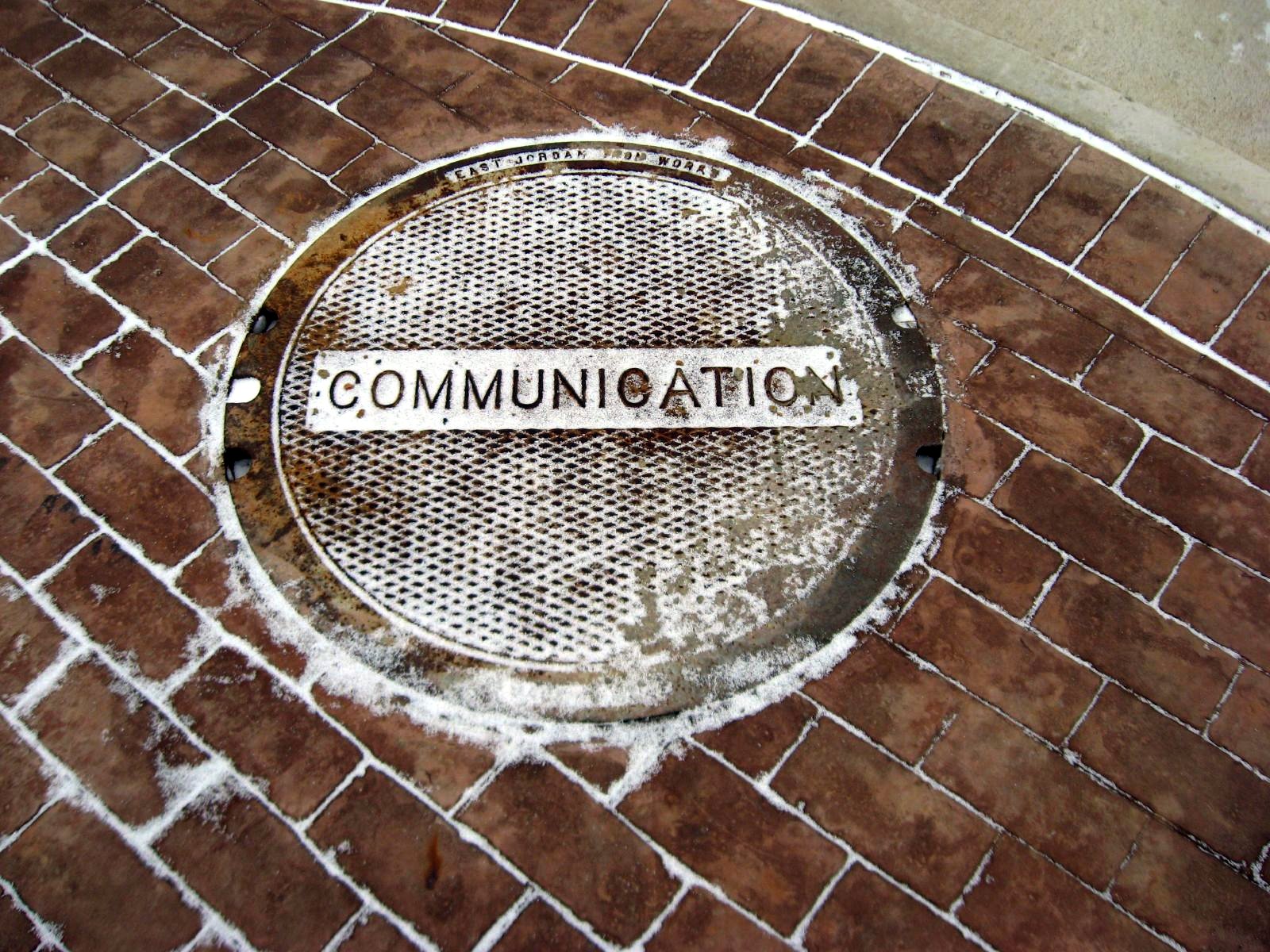
Photo Credit: Communication, by elycefeliz, Flickr


Effective leadership and effective communication are intimately connected. I often tell students, “Although you can be an effective communicator without being an effective leader, effective communication is foundational to effective leadership.”

For some of you, this is energizing. For others—perhaps those who do not like public speaking—this can sound intimidating. But whether we like it or not, effective communication is vital for effective leadership.

It is important to remember, however, that communication takes many forms, uses many mediums, and happens at many levels. While some leaders excel at public forms of communication such as plenary speaking or communication through mass media, others excel at interpersonal forms of dyadic and small group communication.

As leaders, the key is to know our strengths and growth edges as leadership communicators.

Here is quick list of 7 Levels of Leadership Communication that you may use to think through strengths and growth edges in your leadership communication practice:

  1. Intrapersonal Communication — The level of Intrapersonal Communication easy to miss in communication discussions. Intra-personal communication focuses on what is happening at the level of self-leadership. Before you are able to effective communicate with others, the leadership message must be clear to you. The level of intrapersonal reflection and dialogue is focused engaging clarity of thought before engaging clarity of communication. A strong intrapersonal communication supports strong interpersonal communication.
  2. Interpersonal Communication — Moving from intrapersonal communication to interpersonal communication highlights the importance of others in the communication process. Communication is not just about the message sent. It is about the message received. This necessitates understanding the other in the communication process. The following levels help think about the other on multiple levels.
  3. Dyadic Communication Dyadic Communication focus on the dyad of two people. How are you doing at this level of communication? As a leader, are you able to sit down with another individual and effective communicate your leadership message? Are you able to effective listen to the needs of others? Are you able to effectively connect these felt needs with the visionary direction of the organization?
  4. Small Group or Team Communication Small Group/Team Communication takes communication to the next level beyond just two individuals. Are you able to effectively work with small groups of individuals in your organization? Are you able to communicate in such a way that helps the team coalesce around a common vision? Effective leadership communication at the team level also must pay attention to working through and weathering potential storms of conflict.
  5. Divisional or Organizational Communication — Moving beyond the team level, organizational leaders also need to think about communication internally within the organization at the divisional and macro organizational level. Are you able to cast a compelling vision through Organizational Communication? Are you able to use multiple pathways of formal and informal communication to reinforce the central organizational values and goals?
  6. Public or External Communication — Organizational leaders not only need to think about communication within their organizations, but also Public/External Communication beyond the metaphorical walls of the organization. How are you as an external leadership communicator? Are you mindful of the various constituencies that have a vested interest in your organization? Are you finding communication channels that not only work for you, but also work for your target audience? Effective public or external communication helps to expand your organization’s influence in new arenas.
  7. Mass Communication — Finally, Mass Communication is an extension of public/external communication using methods from disciplines such as advertising, journalism, broadcasting, and public relations. Organizational leaders often are not experts in these areas. Because of this, effective leadership communicators at this level often partner with internal or external coaches to help guide effective mass communication for advancing the organization’s message.

Although few leaders excel at all of these levels of leadership communication, this list provides a helpful checklist for thinking through strengths and growth edges in your own leadership communication journey.

Managing the Mountains of Conflict

Conflict is a regularly part of most organizational journeys. Just like any journey to the Pacific Northwest is likely to encounter travel through the Cascade or Rocky Mountains, so any organizational journey is likely to encounter the metaphorical mountains of conflict. Although conflict is a normal and regular part of organizational life, many leaders and organizational members still struggle to find their way through the mountains of conflict.

In this brief video, I use the backdrop of Mt. Hood as an occasion to discuss the importance of understanding conflict styles, working toward conflict resolution, and pursuing the summit of reconciliation.