Where Do You Find Your Identity? — Reflections for Leaders

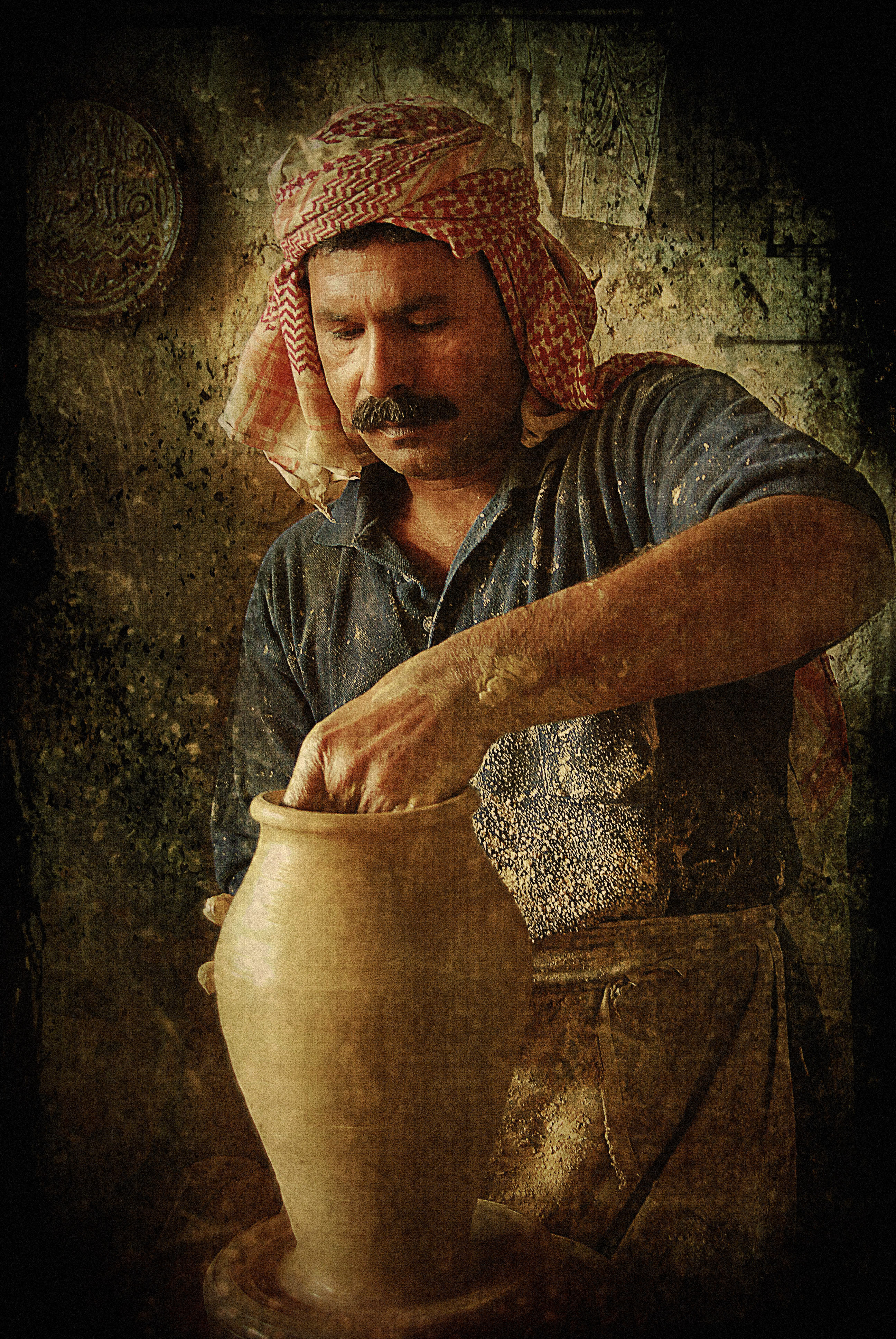
One Moment in Time: Identity II, Dar'ya Sipyeykina, Flickr

Photo Credit: One Moment in Time: Identity II, Dar’ya Sipyeykina, Flickr

Where do you find your identity as a leader? This is big question.

Does your identity come from what you do? Does it come from the title you possess? Does it come from the position you occupy? Does it come from your relationships? Does it come from present or past accomplishments? Does it come from the reputation of the program or institution you lead? And the list of questions could go on.

Finding a Firm Foundation

One of the books I enjoy coming back to on the topic of leadership is a short book by Henri Nouwen. Entitled In the Name of Jesus: Reflections on Christian Leadership, Nouwen provides his take on where identity is wisely grounded. This work provides perspective for those aiming to lead from a place of Christian conviction. Nouwen writes:

leadership must be rooted in the permanent, intimate relationship with the incarnate Word, Jesus, and they need to find there the source for their words, advice, and guidance…. Dealing with burning issues without being rooted in a deep personal relationship with God easily leads to divisiveness because, before we know it, our sense of self is caught up in our opinion about a given subject.” (emphasis mine).

When Identity is Too Closely Aligned with our Opinions, Plans, and Performance

This final phrase in the Nouwen quote provides a significant warning for leaders. While it is important to have passion and conviction behind our ideas and opinions, there is also a danger when our “sense of self is caught up in our opinion about a given subject.” When this happens, we become quite difficult for others to work with. When this happens, a critique of our ideas quickly gets translated as a critique of us personally. When this happens, it becomes very difficult to receive insight and perspective from others.

A Positive Alternative for Identity

At this point in Nouwen’s comments, he continues on with a healthy alternative. Rather than having our identities defined by our opinions, or programs, or initiatives, Nouwen calls us to look to God as the most stable source of all to find our grounding and identity. He writes:

But when we are securely rooted in personal intimacy with the source of life, it will be possible to remain flexible without being relativistic, convinced without being rigid, willing to confront without being offensive, gentle and forgiving without being soft, and true witness without being manipulative.”

A Community Securely Rooted

These are the type of people with whom I want to work. This is the type of person I want to be. I desire to engage in rigorous discussion of unique perspectives and not have questions of my ideas viewed as personal attacks. When we are a people “securely rooted in personal intimacy with the source of life,” rich and deep community flourishes in such contexts. Having my identity rooted in this place helps me to serve others without overly personalizing my or their opinions and agendas in the process.

Perspective, Priorities, and Personal Care — Reflections on Seasonal Transitions

1st Fall Picture, DaDaAce, Flickr

Photo Credit: 1st Fall Picture, DaDaAce, Flickr

Enjoying Summer

I love summer. I love the warm weather that finally arrives in Minnesota. I love the chance to connect with family, friends, and neighbors. I love softball games in the park. I love time to get outside and enjoy nature. I love the change of pace. I love the opportunity to be with people that the normal school year busyness does not always allow.

But summer can be complex as well. Summer activities take planning and coordination. Summer activities take time away from work that needs to get done. Summer activities add a layer of complexity.

Preparing for Fall

I’m feeling this complexity especially as the summer-to-fall transition happens in late August. Summer activities are slowing down and preparations for the school year are ramping up.

For our household, ramping up toward fall is not only about the kids starting back to school. It is also about us as parents preparing for fall teaching. My wife began her teacher training this week. My fall faculty workshop begins next week. And, our kids start back to their first day of school next Monday.

Sometimes ramping up for work can feel like more of a job than the work itself. Training sessions are in motion. School supplies need to be purchased. School uniforms and clothes need to be secured and organized. Lesson plans need to be polished. Syllabi need to be finalized.

Keys for Thriving in Transition

As I’m in the heart of managing this seasonal transition and shifting gears into fall, I’m thinking about keys for managing transitions in seasons of life and work. What are some of the keys to managing transitions well? What are some keys to thriving in the midst of changing seasons?

Here are three guidelines I’ve been thinking about today:

1 — Need for Perspective

If transitional seasons are the norm, this may lead one to weariness very quickly. Thankfully, most of us experience seasons of normalcy between periods of transition. I’m in a very full two week period at the moment. One of the tactics I use to manage this busy season is simply keeping things in perspective.

Anything can be managed for two weeks, right? Perspective helps me to press in, get things done that need to be done, and to remember that this season of transition will soon level out to a new norm in a few weeks. I find that transitions require a need for perspective, and this perspective helps me to stay calm and focused in the midst of the busy season.

2 — Need for Prioritization

We can’t do everything. This is certainly true for me. I’m grateful for the many opportunities I have: serving in a job I love, time with family and friends, invitations to speak, engagement with research and writing projects, pursuing opportunities for learning, serving among communities I value, and the list goes on. But, I can’t do everything…and neither can you. This requires prioritization.

Priorities are based on perspective. As we aim to see our lives and the investment of our time will help us better understand when to say yes and when to say no. When opportunities and invitations arise, having perspective, and prioritizing based on this prospective gives a basis for decisions relate to time investment.

I’m thinking a lot about what to say yes and no to in this season of transition. Though not the only example, I sent a final “no” regarding a conference I wanted to attend in September. I valued the learning opportunity, but in the midst of prioritization, that was something that had to go as I looked to the month ahead.

How are you prioritizing in this season?  Based on these priorities to what are you needing to say yes, and to what are you needing to say no?

3 — Need for Personal & Spiritual Self-Care

I’m also reminded of the need for good spiritual and personal self-care in these seasons of transition. It is amazing what simple things like eating well, getting enough sleep, and taking time to pause for spiritual reflection do in the midst of busy seasons. I like the title of Bill Hybels’ book Too Busy Not to Pray. When it comes to good spiritual and personal care, I think there are many “too busy not to” priorities:

  • Too busy not to sleep well
  • Too busy not to eat well
  • Too busy not to exercise
  • Too busy not to pray
  • Too busy not to reflect and meditate on the Bible
  • Too busy not to spend time with those closest to me

You likely have your own list of priorities for personal and spiritual self-care. In the second point above I emphasized the need to say no to some things. Equally important in busy seasons is the priority of saying yes to what matters most—saying yes to the personal and spiritual self-care that sustains us in busy times.

­_________________________

As you look to your own seasons of change, how are you managing the transitions? Are you getting the perspective you need to guide your decisions? Are you prioritizing based on this perspective? Are you maintaining the needed personal and spiritual self-care in the midst of it all?


C.S. Lewis on Empowerment — Exploring Leadership Development

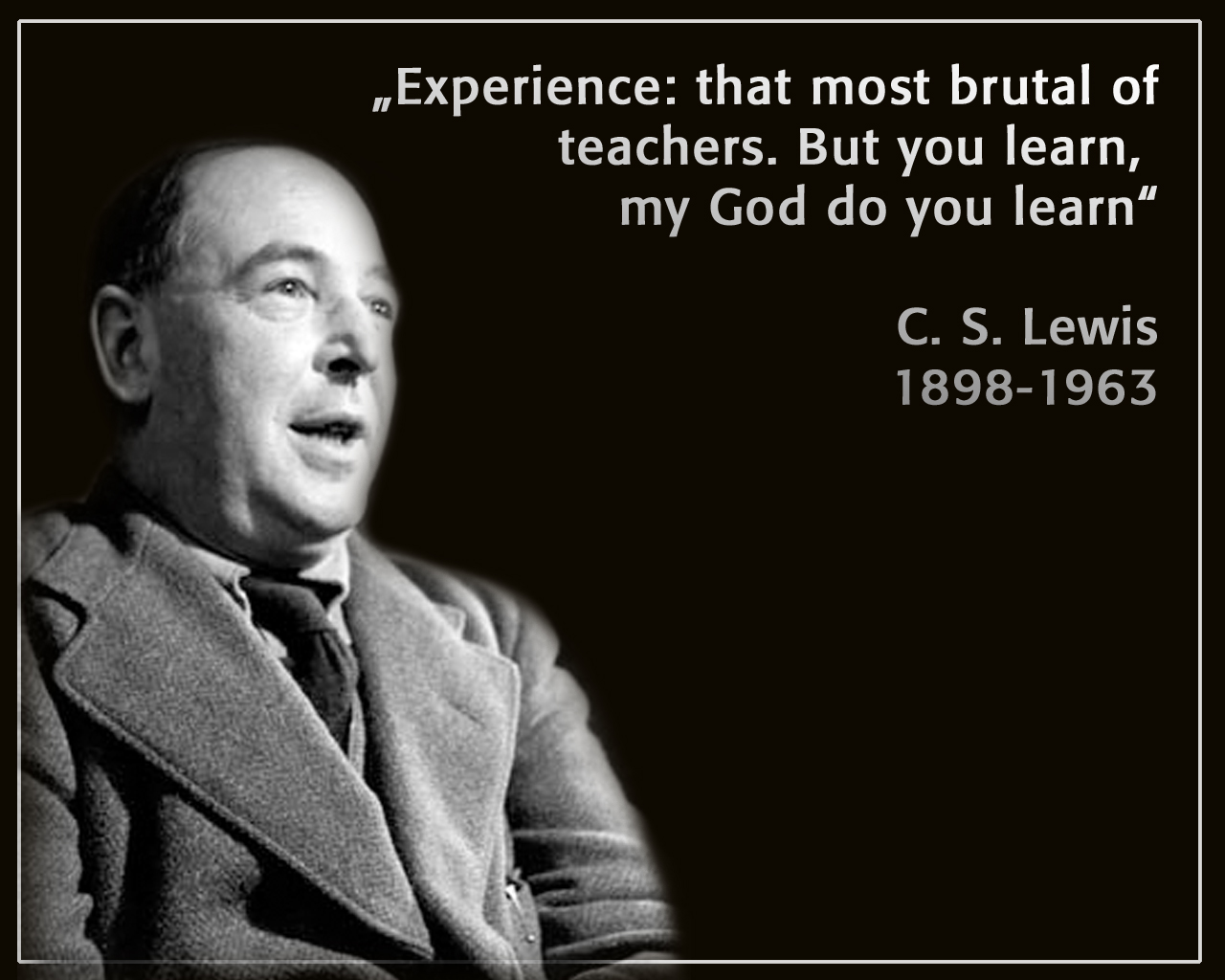
C. S. Lewis, Sigurdur Jonsson, Flickr

Photo Credit: C. S. Lewis, Sigurdur Jonsson, Flickr

Empowerment is vital for effective leadership. It is core to most of our relationships…from teaching, to parenting, to leading.

Leading People to Not Need Us

In discussing love and giving, C.S. Lewis implicitly engages the practice of empowerment. Lewis writes:

The proper aim of giving is to put the recipient in a state where he no longer needs our gift. We feed children in order that they may soon be able to feed themselves; we teach them in order that they may soon not need our teaching.”

Celebrating Growth toward Independence

This principle is not only essential for effective parenting or teaching, it is also essential for effective leading. It raises a heart-searching question for us as leaders: Are we leading our people to dependency on our leadership, or are we leading them to a place of independence and interdependence?

Recognizing Leader Struggles Along the Way

Organizational leaders who hunger for power and position will have difficulty leading followers to a place of independence. Organizational leaders who struggle with personal insecurity will struggle to free followers to this place as well.

Secure and follower-focused leaders recognize that it is a win for both their followers and their organizations to create pathways where leaders may be both developed and empowered for service.

Finding the Reward of Empowerment

Lewis continues to press his argument:

Thus a heavy task is laid upon the Gift-love. It must work towards its own abdication. We must aim at making ourselves superfluous. The hour when we can say ‘They need me no longer’ should be our reward.”

All too often, our saying “they need me no longer” is viewed as a threat rather than a reward. But true love—love that holds the importance of others and their goals alongside our own goals—will lead in such a way that both leader and follower values, goals, aspirations, and dreams may be pursued.

Developing and Deploying Emerging Leaders

In reality, leaders who get the concept of developing and deploying their people do not work themselves out of a job, for such leaders are constantly creating new opportunities for new developing leaders. Great leaders create space for others to flourish. Great leaders identify potential, develop this potential, and release this potential into new roles and opportunities.

Leadership development does not need to be a zero sum game. Thriving organizations and entrepreneurial communities benefit from a regular flow of developed and empowered leaders released into new opportunities.

_______________________________

How are you wired as a leader around these themes? Do you tend to hold onto authority over others, or are you wired to identify, develop, and release talent in the cause of your organization’s mission? Great leaders empower their people!

3 Reasons God Cares about Your Work

Work, Wacky Toyo Boy Borj, Flickr

Photo Credit: Work, Wacky Toyo Boy Borj, Flickr

Adding Value to the Lives of Others

Work takes many forms. At its core, work is anything that we do to add value to the lives of others. In contrast to this, play and recreation tend to be things focused on adding value to our own lives.

Sometimes we add value to the lives of others on the job when we are compensated in one form or another for our work. Other times, we add value to the lives of others through volunteer service or through the work we do for our family and friends.

Practicing the Presence of God in Our Work

As I was engaged in this last type of work (cleaning up dishes at home this weekend), my mind was draw to Brother Lawrence and his focus on “practicing the presence of God” in all of life and work. Here’s a link to some of his reflections (The Practice of the Presence of God: The Best Rule of Holy Life).

One of the prayers attributed to Brother Lawrence emphasizes 3 reasons that God cares about your work. Here’s my summary of these 3 reasons:

1.  God Wants to Mold You in Your Work

First, God cares about your work because God wants to mold you and shape you through your work. He wants to form and change you through serving others and adding value to their lives. On this point, Brother Lawrence prayed,

“Lord of all pots and pans and things…
make me a saint by getting meals,
and washing up the plates.”

Through our work, God molds our character and values. Through our work, we are developed not only professionally but also personally. God uses work for our professional, personal, and spiritual formation. He uses work to change us for the better.

2.  God Wants to Meet You in Your Work

Second, God cares about your work because God cares about you. For many Christians, there is a tendency to separate our lives of weekend worship from weekday work. But God is not interested in just meeting you on Sunday morning (or whenever you gather for worship). God wants to meet you on Monday morning as well. He wants to meet with you and have you recognize His presence with you in your work. On this point, Brother Lawrence prayed,

Warm all the kitchen with Thy Love,
and light it with Thy peace;
forgive me all my worrying,
and make my grumbling cease
.”

You can join Brother Lawrence in asking God to Warm all the kitchen / office / garage / home / school / shop / etc. with His Love, and light it with His peace. Ask God for wisdom on the job (James 1:5). Talk with him about the opportunities and challenges you face. When worried or anxious about something you are facing, offer this emotion up to the Lord and invite Him to replace this with His peace (Philippians 4:6-7). Look for God to meet you in your work.

3.  God Wants to Minister through You in Your Work

Finally, God cares about your work because God wants to minister through you to others. Work is one of the main pathways we add value to the lives of those around us. On this point, Brother Lawrence prayed,

Thou who didst love to give men food,
in room, or by the sea,
accept the service that I do,
I do it unto Thee. Amen.”

As Brother Lawrence notes, Jesus not only met people’s spiritual needs, but He also met physical needs for food. We serve similar needs for one another through our work. God not only cares about you as a worker, He cares about the work you do. And, the work we do for others, particularly those with the greatest need, Christ views as service to Him also (Mathew 25:40).

God not only cares about chefs, He cares about the food we eat. He not only cares about dentists, but He cares about dentistry and the care of our teeth. He not only cares about plumbers, but also cares about access to water and a sanitary environment in which we can live. God uses your work to add value to the lives of others and to meet the needs of others. In our service to others, we are also serving Christ.

__________________

Your work matters to God. Through it he wants to mold you, meet you, and minister through you. Are you keeping your eyes, ears, and spirit open to God in the midst of your work?

The Priority of Potential — Spotting Talent for our Organizations

Potential!, Miles Goodhew, Flickr

Photo Credit: Potential!, by Miles Goodhew, Flickr

In a previous post I highlighted 8 Core Leadership Abilities. In the same HBR article, Claudio Fernández-Aráoz engages the important theme of how to spot talent in the 21st century.

A History of Talent Searching

Over the centuries and years, diverse approaches have emerged for identifying leadership and managerial talent. Fernández-Aráoz identifies this progression around four movements:

Focus on Physical Attributes — Those who were fittest, healthiest, and strongest.

Focus on Intelligence and Experience — Those who were the most intelligent, most experienced, and those with the best past performance.

Focus on Testing for Competencies— Those who possess the right set of characteristics and skills associated with predicted job performance.

Focus on Potential  — Those who are ready to engage the VUCA environment of Volatility, Uncertainty, Complexity, and Ambiguity.

Why Potential

In the VUCA world of increased volatility, uncertainty, complexity, and ambiguity, there are new demands on prospective talent. Fernández-Aráoz discusses the factors of globalization, demographic shifts, and challenges to the talent development pipeline. The talent development pipeline is significantly stretched due to increased competition in this changing environment of the 21st century. These factors are forcing organizations to focus on identifying potential (not just track-records of success), and then developing and retaining this talent in the years ahead.

What to Look for When Looking for Potential

So, how is potential spotted? What qualities are the hallmarks of such potential? Fernández-Aráoz identifies the following hallmarks for spotting talent and potential in the 21st century:

Motivation — “…a fierce commitment to excel in the pursuit of unselfish goals.”

Curiosity — “…a penchant for seeking out new experiences, knowledge, and candid feedback and an openness to learning and change.”

Insight — “…the ability to gather and make sense of information that suggests new possibilities.”

Engagement — “…a knack for using emotion and logic to communicate a persuasive vision and connect with people.”

Determination — “…the wherewithal to fight for difficult goals despite challenges and to bounce back from adversity.”

How to Develop those with Potential

Because spotting potential is quickly becoming the new norm, developing this potential talent in our organizations is becoming the highest priority. How are motivation, curiosity, insight, engagement, and determination built upon so that individuals with potential translate into individuals with performance?

Fernández-Aráoz identifies the priority of stretch development. On this point Fernández-Aráoz notes, “when it comes to developing executives for future leadership assignments, we’re constantly striving to find the optimal level of discomfort in the next role or project, because that’s where the most learning happens.” Finding stretching assignments, where those with potential don’t immediately have all the answers, is one of the chief pathways in moving individuals from potential to performance.

______________________________

How are you identifying potential around you? How are you developing this potential into performance?

Cease Striving — Calling Leaders to Rest

Rest Here, Esther Simpson, Flickr

Photo Credit: Rest Here, by Esther Simpson, Flickr

“Cease striving and know that I am God.” – Ps. 46:10

Getting Things Done

As leaders, we tend to be achievers. We tend toward making things happen… toward work… toward activity… toward doing… toward performance… toward striving.

Of course, these characteristics have some very positive dimensions to them. Things tend to get done. Teams tend to perform. Organizations tend to run well. But can there be too much of a good thing when it comes to this leadership tendency?

Too Much of a Good Thing…Cease Striving

For Christian leaders, it is important to remember that leadership does not just happen by human effort and work. The reality of God’s existence changes the leadership equation for our lives as leaders and for our organizations. Christians believe in a God who does not simply sit back and watch His people work. Rather, Christians believe in a God who not only watches, but He is also engaged in the work itself.

The verse quoted above calls us to be still, to cease striving, and to know that God is God (Ps. 46:10). We are called to trust that God is at work even when we are not. We are called to trust that God is in control even when we feel we are not. We are call to take the attention off of ourselves and our striving, and transfer that attention to God who is actively engaged in our lives, organizations, and world.

He Gives to His Beloved Even as They Sleep

Beyond Psalm 46, there are many other passages in the Bible that remind us as leaders that striving is not always the answer. Sometimes the answer is resting rather than striving, because God is at work even when we are not.

One of my favorite passages on this point is Psalm 127:2…

It is vain for you to rise up early, To retire late, To eat the bread of painful labors;
For He gives to His beloved even in his sleep
.”

What a powerful reality. God gives to us, even when we sleep. God works while we rest.

Some versions translate the end of this verse as “he grants sleep to those he loves.” The reality is both concepts are true and powerful. He gives us sleep. He gives to us and our communities while we sleep.

Resting in the One Who Works

As leaders who work hard during the day, we should take time to “cease striving” and to rest. We should cease our work and go to sleep in peace knowing that:

  1. God grants sleep to his beloved, and
  2. Even in our sleep, God is still working on behalf of those who are resting in Him.

Good Theology = Good Rest

What powerful theology for those in need of rest. As leaders, we need to be able to shut down and rest. We need to be shut down and spend time with friends and family. We need to be able to shut down and sleep.

Leaders who believe the entire story of leadership success is written by their own effort will struggle to find the rest and restoration they and their people need. As we trust that God is at work, even when we are not, then the rest we need as leaders will be found by relying on the one who graciously works on our behalf.

Are you finding your rest in the Lord? Are you waiting on the one who is able to work for you? Are you finding refreshment by resting in the one who gives to His people even while they sleep?

8 Core Leadership Abilities

Follow the Leader, by Vinoth Chandar, Flickr

Photo Credit: Follow the Leader, by Vinoth Chandar, Flickr

In a recent issue of Harvard Business Review, Claudio Fernández-Aráoz identifies 8 abilities that the best leaders possess. Here is the list, along with a brief description and summary of each item on the list.

  1. Strategic Orientation: The capacity to engage in broad, complex analytical and conceptual thinking.” The new realities surrounding organizations demand that leaders have a capacity to engage in strategic thinking in the face of complexity.  Are you thinking about your organizational realities through a strategic lens?
  2. Market Insight: A strong understanding of the market and how it affects the business.” Along with increased complexity, the world is more connected to our organizations than ever before. Are you paying attention to the environment surrounding your organization and how this environment will shape the way your organization goes about its work?
  3. Results Orientation: A commitment to demonstrably improving key business metrics.” Increases in complexity and connectivity in our world translate into increased competition. This increased competition necessitates that leaders pay attention to performance for the things that matter to your community. Are you measuring what matters most to your organization?
  4. Customer Impact: A passion for serving the customer.” In-grown organizations will struggle to thrive in the changing economy. Who do you serve as an organization? Do you have a passion for providing the best possible service for these individuals and communities?
  5. Collaboration and Influence: An ability to work effectively with peers or partners, including those not in the line of command.” Leadership in today’s organizations is not simply about individuals getting individual work accomplished. Complex problems require complex solutions that are often worked out in collaboration. Do you possess a collaborative orientation?
  6. Organizational Development: A drive to improve the company by attracting and developing top talent.” Finding, recruiting, and retaining top talent is a substantial need in the coming years. Factors such as globalization and demographic shifts are making this need more pronounced. How are you leading your organization in a path of intentional leadership development?
  7. Team Leadership: Success in focusing, aligning, and building effective groups.” As noted above related to collaboration, it is no longer about individuals accomplishing individual outcomes. Organizations today require effective groups or teams working together to accomplish increasingly complex outcomes. Are you developing your capacity as a team player?
  8. Change Leadership: The capacity to transform and align an organization around a new goal.” Our changing world translates into dynamic and changing organizations. How are you developing your change leadership capacity? As a community this will be essential as you lean into these organizational and environment transitions?

As the world around us changes, a capacity to adapt to new environments is critical. As you consider these 8 Core Leadership Abilities, what are your strengths? What are your growth edges? Are you committed both to developing yourself and those around you to meet the demands of leadership today?

Follower Motivation and Leader Humility

Humanity, Love, Respect (B.S. Wise, Flickr)

Photo Credit: Humanity, Love, Respect, by B.S. Wise, Flickr

The challenges leaders face in developing motivation and empowerment among followers are many.

There may be challenges in the interpersonal or dyadic relationship between individual leaders and followers. There may be challenges within the team or group environment at any of the forming, storming, norming, or performing stages. There may be challenges at the level of organizational systems within which leaders and followers are embedded. Or, there may be challenges external to the organization such as a difficult economic environment straining follower and leader expectations of performance.

Beginning with Leader Self-Reflection

While each of these levels may be challenges to motivation and empowerment, leaders should begin by considering their own role in leadership challenges. In a previous post I argued that Effective Leadership = Effective Self-Leadership. When leaders face challenges in motivating and empowering followers it is important to first look to themselves as leaders—to begin seeing how they personally may have contributed to demotivating followers. The Bible makes this priority personal: “Why do you see the speck that is in your brother’s eye, but do not notice the log that is in your own eye?” (Matthew 7:3).

As a leader,
are you prone to look first to the proverbial speck in a follower’s eye,
or the log in our own eye?

Avoiding the Fundamental Attribution Error

In challenging times it is easy to look to others or our environment and assign fault to them. This tendency is described by some as the fundamental attribution error or actor-observer bias. But thoughtful leaders are self-reflective leaders. They resist the fundamental attribution error and consider how they personally may be contributing to a problem and how followers may be impacted by their environment. They are leaders willing to look first to their contribution to a situation and work out from there to other relevant contributing factors.

Desiring Personal Humility

In light of such logic, we might argue that the greatest challenge to motivating and empowering followers is me and you. It is about self-reflection and self-leadership first. Jim Collin’s notes this point in his book Good to Great. At the heart of Collins’ work is the concept of level five leadership. Collins describes Level Five Leaders as having a unique blend of both professional will and personal humility. With such a blend, a leader has the self-confidence and self-efficacy to own that they do not have all of the answers and that they have less control than they may have originally thought. They also are willing to look into the mirror and see what their contribution is to the lack of motivation among followers.

Pressing Forward with Personal Humility and Follower Motivation

As leaders engage in personal reflection, embrace a spirit of humility, and acknowledge their own contribution to challenges … powerful result emerges. Rather than thinking less of leaders, followers generally grow in their respect for leaders who demonstrate authenticity and a willingness to own their part in challenges. Along this path, leaders begin by truly recognizing where actual power lies—with the wider organizational membership and not just leaders. From this place, leaders are able to motivate followers in authentic and meaningful ways. This motivation may take the form of genuinely valuing and developing people. It may also take the form of channeling followers to orient their attention on vision and performance that matters to them and the organization.

_______________________________

Leader self-reflection and humility is a key starting point in making such motivation and empowerment come to life. Have you seen positive examples of leader humility in your organizations? What impact did this have on the community and the overall motivation experienced by organizational members?