6 Insights from My First Year of Blogging

Blogging, by Sean MacEntee, Flickr

Blogging, by Sean MacEntee, Flickr

Here are 6 insights from my first year of blogging on my Purpose in Leadership site. Though I began blogging midway through 2014, this first month of 2015 has led me to pause and think through some of the key lessons I have learned from blogging in 2014.

Certainly there is great value in learning from seasoned bloggers. I appreciate the many insights I find in the writing of veteran bloggers. A fresh set of eyes is also helpful. Because of this, I offer the following insights on blogging from my vantage point as a “newbie”, and hopefully bring some fresh perspective into the conversation.

Here are my top 6 Insights from My First Year of Blogging:

Insight 1 — Getting Started & Building Up Content

A friend advised me early on to build up content quickly. In other words, if you are just beginning your blog, try to work ahead and build up a dozen or so posts before launching. In addition to this, when you do launch, focus on regular posting as you continue to build up a foundation of quality content.

For me, regular posting meant that I sought to post daily for about the first two months of my blog. Everyone’s capacity is different. Perhaps you will be able to maintain daily posts indefinitely. Perhaps daily posting is not realistic for you, even from the start. The key is to find a workable pace that you are able to sustain for at least an initial season of time. Not only does this help you gain familiarity with the format as a blogger, it also helps to position your blog meaningfully in relationship to how search engines operate. Here is a helpful guide to search engine optimization.

Insight 2 — Maintaining Momentum & Finding a Sustainable Pace

After an initial push of getting started and building up content, it is important to maintain the momentum that was started and find a sustainable pace. Although daily posts were a priority for me early in the blogging journey, daily posts were not sustainable in light of all the opportunities and demands in my life.

One of my personal commitments early on was I wanted to maintain blogging as an enjoyable part of my life rather than it becoming a burden. This blog is not my job—it is not what I do for a living. Rather, it is something that I do because I enjoy it. Part of maintaining joy in blogging is finding the right pace. At the start, I really enjoyed the process of writing and posting daily. As the demands on my life increased in the fall, both in terms of my work life and home life, I knew that I needed to pull back from daily posting. Though my posting was sporadic after my initial launch and initial two months, I have settled into a pattern of weekly posting. This pace keeps me engaged with something that I enjoy doing, and but does so in a sustainable manner. This pace will likely change in the future again, but the key is to find a pace that maintains joy in the blogging journey.

Insight 3 — Keeping it Fresh & Timely

In terms of the content engaged in my posts, there are a couple key insights I’d like to offer. First, I find that blogging comes most naturally when I keep it fresh and share it in a timely manner. What do I mean by this? My content is most meaningful to me and readers when I am writing on material I am currently engaging.

Practically speaking, this means that I often am blogging about things I am reading about and reflecting upon currently. When it is fresh on my mind and when it is something that I am currently engaging in my reading and study, it provides a helpful base from which to draft meaningful blog posts. Doing this helps create energy for me in the writing process and seems to be helpful for readers as well.

Insight 4 — Focusing on Topics of Interest

Although I do not have a large history of statistics from which to draw for analysis, what I’m finding in the data is helpful. From 2014, the following categories drew the most engagement from readers: Personal Development, Leadership, and Organizational Strategy. Individuals and leaders are drawn toward writing that helps them think about their personal development. Additionally, topics such as leading change, communicating well as leaders, and understanding organizational vision were also themes that drew interest.

Leadership is a broad topic, and thus the blog posts can go any number of directions. As I think through potential topics for the future, I want to engage not only what is interesting for me to write, but also what is actually helpful for readers. Looking at categories and topics that demonstrate higher engagement helps me to know what is most helpful for future posts. Although there are other factors that will be considered as I land on future posts, I am aiming to be responsive to what readers find meaningful and helpful.

Insight 5 — Making Your Posts Attractive

At the end of the day, I think the content of blog posts is more important than format. However, making a blog site and blog posts attractive and reader-friendly is a helpful practice. Here are some of the basic principles I’ve observed on this front in my first year of blogging. First, find a picture that is attractive and on topic to include with your post. Flickr’s creative commons (https://www.flickr.com/creativecommons/) is a helpful source for photos, though you will want to become familiar with the various standards associated with using creative commons photos. A well-selected photo, or better yet a photo that you have taken that is on topic, can significant add to reader engagement with your blog.

Second, use formatting that helps your reader easily follow the logic and big ideas you are sharing in your posts. For me, this translates into using subheadings that are bolded for readers, a sparing amount of italicized words and phrases for emphasis, and the use of bullet points or enumerated lists.

  1. Lists provide a way for readers to quickly see the points you are making.
  2. Lists force you as a writer to decide on crisp expression of your ideas.
  3. Lists provide a visual tool to break up standard prose.

Third, and similar to the point above regarding bullet points and enumerated lists, bringing a list-based structure into both the outline and heading of the blog post helps reader engagement.  Though the use of lists may be a passing trend in blogs, it is quite helpful in drawing attention to the core ideas you wish to communicate. Three of my top five posts from 2014 were titled around lists (37 Barriers to Change, 7 Levels of Leadership Communication, and 6 Characteristics of Organizations with Vision). Also, as you may already have noticed, I have used a list-based structure for this blog post as well in order to model the practice.

Though format is not the main thing in blogging—content is—formatting will help your readers show up and meaningfully engage the quality content you are putting together in your blog.

Insight 6 — Keeping Focus & Engaging Globally

Finally, I recommend keeping focused (though with global breadth). It is helpful to maintain focus in a blog. What is your area of expertise? What is it that you are able to write about with passion and purpose? How you answer these questions provides a focus to a blog. For me, leadership is the unifying focus in my blog. Though I will occasional venture out into something on the peripheral side of things (e.g., posting pictures from a recent trip to NYC), my focus for the blog is leadership. This is the area in which I have some measure of expertise, and it is the area of focus I want readers to associate with the blog.

In addition to keeping focus, I also want to write on this focused topic of leadership in a way that meaningfully connects with a broad and global audience. One of the joys in this first year of blogging is seeing the amazing people I have begun to connect with because of the blog.

It was quite a surprise to read an overview of 2014 stats on this front. In 2014, individuals from around 94 countries engaged with the Purpose in Leadership blog. Topping this list of 94 countries were individuals from the United States, the United Kingdom, Canada, Brazil, Australia, India, and Kenya. What an amazing reality—that blogging provides a platform for communicating with such a broad audience.


I hope some of these insights are helpful for you as you think about either your current blog or one that you may potentially start in the future. Thanks for being a part of the Purpose in Leadership community.
20 Quotes from MLK

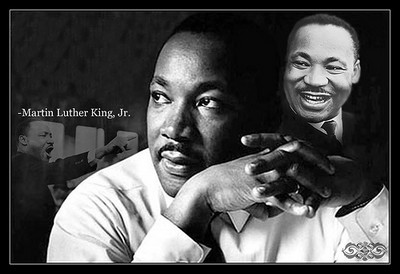
Martin Luther King, by caboindex, Flickr

Photo Credit: Martin Luther King, by caboindex, Flickr

Today is Martin Luther King, Jr. Day, and is another opportunity for intentional reflection on Dr. King’s vision of justice and racial reconciliation. In the United States we have a challenging history around racism. From Pre-Civil War slavery, to segregation under Jim Crow Laws, to the ongoing racial tensions felt in our day, it is important to remember from where we have come and where we still need to go.

As a means of remembering well today so we can move forward tomorrow, I offer 20 of my favorite Quotes from Dr. Martin Luther King on this Martin Luther King, Jr. Day.


I have a dream that my four little children will one day live in a nation where they will not be judged by the color of their skin but by the content of their character.” 


“Life’s most persistent and urgent questions is, ‘What are you doing for others?'”


“Everybody can be great…because anybody can serve. You don’t have to have a college degree to serve. You don’t have to make your subject and verb agree to serve. You only need a heart full of grace. A soul generated by love.”


“The ultimate measure of a man is not where he stands in moments of comfort and convenience, but where he stands at times of challenge and controversy.”


“Intelligence plus character – that is the goal of true education.”


“Darkness cannot drive out darkness; only light can do that. Hate cannot drive out hate; only love can do that.”


“The arc of the moral universe is long, but it bends towards justice.”


“Injustice anywhere is a threat to justice everywhere.”


“Justice too long delayed is justice denied.”


“We know through painful experience that freedom is never voluntarily given by the oppressor; it must be demanded by the oppressed.”


“Our lives begin to end the day we become silent about things that matter.”


“In the end, we will remember not the words of our enemies, but the silence of our friends.”


“Love is the only force capable of transforming an enemy to a friend.”


“People fail to get along because they fear each other; they fear each other because they don’t know each other; they don’t know each other because they have not communicated with each other.”


“Faith is taking the first step even when you can’t see the whole staircase.”


“If you can’t fly then run, if you can’t run then walk, if you can’t walk then crawl, but whatever you do you have to keep moving forward.”


“The time is always right to do the right thing.”


“If a man is called to be a street sweeper, he should sweep streets even as a Michelangelo painted, or Beethoven composed music or Shakespeare wrote poetry. He should sweep streets so well that all the hosts of heaven and earth will pause to say ‘Here lived a great street sweeper who did his job well.'”


“I have decided to stick with love. Hate is too great a burden to bear.”


“I submit to you that if a man has not discovered something that he will die for, he isn’t fit to live.”


As we celebrate the life of Dr. Martin Luther King, we also want to celebrate his vision of justice and racial reconciliation. May we keep Dr. King’s dream alive in the year ahead as we play our part in working for justice and loving our neighbors.

Taking the Next Step — How to Improve Individuals and Organizations

Photo by Justin Irving; new Vikings Stadium in process.

Photo by Justin A. Irving; new Vikings Stadium in process.

One of my favorite quotes from W. Edwards Deming is “Your system is perfectly designed to give you the results you’re getting.” What a great reminder. And, this helpful reminder raises a key question: What are your results telling you?

Deming is a key figure in operations management and the pursuit of continuous improvement within operational systems. Management theories like Total Quality Management (TQM) and beyond have been significantly shaped by Deming’s key principles. While Deming’s work is primarily designed for macro operational settings, the lessons are helpful for both organizations and individuals. What are your results telling you organizationally? What are your results telling you individually?

Here are a few highlights from Deming I offer for your consideration

Deming’s 14 Key Principles

Deming is known for 14 Key Principles in his approach to management. I will not review all of these here since they get into specific dimensions of organizational operations. However, here are a few high points of these principles from Deming’s book Out of the Crisis.

  1. Prioritizing the Creation of Constancy of Purpose: “Create constancy of purpose toward improvement of product and service, with the aim to become competitive and to stay in business, and to provide jobs.” Improvement at the organizational and individual level does not come by constantly changing focus. Deming’s first point reminds us of the importance of staying the course, remaining focused, and keeping our aims before us. Are you constantly changing your aims, or are you maintaining constancy of purpose and staying focused on what matters most?
  2. Committing to Improve Constantly: “Improve constantly and forever the system of production and service, to improve quality and productivity, and thus constantly decrease costs.” Whether at the organizational or individual level, what problems or challenges exist in the system? If “your system is perfectly designed to give you the results you’re getting,” then what problems need to be addressed and are you asking this question regularly?
  3. Taking Action toward Transformation: “Put everybody in the company to work to accomplish the transformation. The transformation is everybody’s job.” If, as noted above, we have identified the problems holding us back, then it is time for action based on these identified problems. Deming’s final point is a call to action. If at an organizational level, this means focusing everyone’s attention on the problems that need to be addressed and the transformation that is desired. If at an individual level, this translates into prioritizing desired outcomes and shaping our decisions and actions toward this desired transformation.

Deming’s Wheel (P.D.C.A.)

Deming's Wheel

In addition to Deming’s 14 Key Principles, another helpful lesson from Deming’s thinking is Deming’s Wheel. Deming’s Wheel is a four stage process focused on (1) planning, (2) doing, (3) checking, and (4) acting, and helps to simplify core steps along a path of continuous improvement.

  • Plan: Plan an improvement
  • Do: Do the activity planned
  • Check: Check the results of this activity
  • Act: Act on these results in order to make future improvements

Whether at the organizational or individual level, Deming’s Wheel of PlanDoCheckAct provides a memorable model for engaging in continuous improvement. Consider what transformation you desire in your life or in your organization. (1) Make plans for an improvement. (2) Do the planned activity toward this improvement. (3) Check the results of the activity you did. (4) Act/Revise your future planning based on the observed results.

Your system is perfectly designed to give you the results you’re getting.” What are your results telling you? Perhaps Deming’s approach to continuous improvement will provide you with some practical insights on how to take the next step toward improvement both organizationally and individually. It’s time to Plan – DoCheckAct.

Top 5 Blog Posts from 2014

2014 was my first year entering the blogging world on the writing end. This new year marks my 15th year teaching in higher education, and this blog has been a great place for me to share some of the core lessons learned over the years. Blogging is a helpful pathway for sharing insights in a brief and accessible format. I have enjoyed learning a bit about blogging this first year, sharing reflections on leadership, and connecting with a many new people through this format.

As I look back on my first year of blogging, here is a list of the Top 5 Blog Posts from 2014. Feel free to take a look at these posts that drew the most attention from Purpose in Leadership readers.

Top 5 Posts from 2014

  1. 37 Barriers to Change 

    Barrier 4 - Love Wins, by hji, Flickr

    Barrier 4 – Love Wins, by hji, Flickr

  2. 7 Levels of Leadership Communication

    Communication, by elycefeliz, Flickr

    Communication, by elycefeliz, Flickr

  3. Groups vs. Teams: What’s the Difference?

    Working Together Teamwork Puzzle Concept, Scott Maxwell, Flickr

    Working Together Teamwork Puzzle Concept, Scott Maxwell, Flickr

  4. Leader Resiliency … Face Reality, Find Meaning, Forge a New Path

    by Arya Aiai, Flickr

    by Arya Aiai, Flickr

  5. 6 Characteristics of Organizations with Vision

    mind_scratch, Ultima visión, Flickr

    mind_scratch, Ultima visión, Flickr

Thanks for taking an interest in the Purpose in Leadership blog, and I hope some of the blog posts in 2014 were helpful to you.

Blessings to you as we press into 2015 together!

– Justin A. Irving, Ph.D.

Rethinking Resolutions — Prioritizing for the New Year

New Year's Resolutions, One Way Stock (http://www.onewaystock.com/zzz_page_NewYearsResolutions.php)

Photo Credit: New Year’s Resolutions, One Way Stock

New Year’s Resolutions

What are your typical New Year’s resolutions?

I’m actually not a big fan of New Year’s resolutions, but I am a fan of using the beginning of a new year as an opportunity to reflect. As I look back on one year and then consider the next year ahead, it is an opportunity to step back and pay attention to the big picture—to pay attention to the things that matter most.

As you consider this past year what have been your significant challenges and what has gone well? What are the key lessons you are taking from this past year? How is this look to the past influencing your goals and desires for the future?

What Are the Big Rocks?

The reality is we cannot do everything. We have to make choices. We have to prioritize. As I look to the year ahead, one of the most helpful metaphors for me continues to be the image of Putting the Big Rocks in First suggested by Steven Covey.

Familiar to many, in First Things First Covey shares the following story about prioritizing:

I attended a seminar once where the instructor was lecturing on time. At one point, he said, “Okay, it’s time for a quiz.” He reached under the table and pulled out a wide-mouth gallon jar. He set it on the table next to a platter with some fist-si zed rocks on it. “How many of these rocks do you think we can get in the jar?” he asked.

After we make our guess, he said, “Okay, let’s find out.” He set one rock in the jar…then another…then another. I don’t remember how many he got in, but he got the jar full. Then he asked, “Is the jar full?”

Everybody looked at the rocks and said, “Yes.”

The he said, “Ahh.” He reached under the table and pulled out a bucket of gravel. Then he dumped some gravel in and shook the jar and the gravel went in all the little spaces left by the big rocks. Then he grinned and said once more, “Is the jar full?”

By this time we were on to him. “Probably not,” we said.

“Good!” he replied. And he reached under the table and brought out a bucket of sand. He started dumping the sand in and it went in all the little spaces left by the rocks and gravel. Once more he looked at us and said, “Is the jar full?”

“No!” we all roared.

He said, “Good!” and he grabbed a pitcher of water and began to pour it in. He got something like a quart of water in that jar. Then he said, “Well, what’s the point?”

Somebody said, “Well, there are gaps and if you really work at it, you can always fit more into your life.”

“No,” he said, “that’s not the point. The point is this: if you hadn’t put these big rocks in first, you would never have gotten any of them in?”

(Source: Covey, Stephen R., A. Roger Merrill, and Rebecca R. Merrill. First things first. Simon and Schuster, 1995.)

Prioritizing What Matters Most

So here is the major take away from Covey’s story: As we consider the hundreds and thousands of things that can be done in the year ahead, what are the specific things that matter most? What are the areas in our lives and the goals that we have that must be prioritized? Generally speaking, if we don’t carve out space and time for the things that matter most, our priorities often get pushed aside by the daily demands of life. So what are the things in your life that are just too important to be pushed aside?

Ongoing Priorities and New Priorities

As I consider my own big rocks, some big rocks are priorities I desire for each new year—quality time with my family, treasuring Christ and His love shown to us in the gospel, and faithfully serving others through my work. Other big rocks for a specific year and require focused energy for a specific time in my life. One such example for me is working to complete a majority of my remaining MBA classes in the year ahead.

In the coming year my life will be full of both planned and unplanned events. This means that I need to hold my plans loosely. But as I plan for the year ahead, I want to keep the “Big Rock” priorities in mind so that the things that matter most are not needlessly pushed aside by daily busyness. Some of my plans will likely need to change as I respond to new circumstances, opportunities, and invitations that emerge. But in the midst of the busyness, if I put the big rocks first I will be able to keep central the things that matter most and then allow the other necessities of life to fill in between the spaces left between the metaphorical big rocks.

Identifying Your Big Rocks

So what are your “Big Rocks” for the year ahead?

Rather than making New Year’s resolutions, I’d encourage you to reflect upon and identify your priorities for the year ahead. This is not about making resolutions or promises to yourself that will fade away by mid-January; this is about a deep process of thinking through your core values and core goals, and then prioritizing what matters most as you move into the year ahead. Enjoy this opportunity to look ahead to the new year and then make your priorities explicit as you launch into the next twelve months.

A Poem for Christmas — Enjoy!

Immanuel, by Daniel Go, Flicker

Photo Credit: Immanuel, by Daniel Go, Flicker

On this Christmas Eve, my thoughts turn once again to the amazing reality we celebrate at Christmas. Incarnation the reality that God came among us in human form. Immanuel God with us. Christmas reminds us that God came near, that God cares, that God initiated a path to restore our brokenness. Here’s a poem I wrote in the early 1990s that helps me focus of the wonder and significance of what we celebrate at Christmas. Merry Christmas!

Immanuel — God with Us

It seems quite strange, that on this day
the Lord of heaven and earth would lay
Amidst the straw-filled stable stall
though He was sovereign over all.

For He was God, yet did not grasp
His rightful place before the mass
Of many laud-filled cherubim
and hosts of holy seraphim.

He rather made Himself to be
a humble servant of His King
And of His Father’s holy will
that offered Him upon the hill.

To pay for our iniquities
and take up our infirmities,
The Lord of hosts did lay on Him
the weight of all our crushing sin.

This is the reason that God gave
to Him the name above all names;
That at the name of Jesus bow
all heaven and earth, for this is how

It ought to be, and I now see
He is the one sure Majesty,
Who reigns forevermore—Adore
this one true King who is our Lord.

For unto us was born this day,
within the humble stall, in hay,
Our Mighty God and Prince of Peace—
the One whose rule will never cease.

And yet, it seems now so profound,
that King of All would cry a sound
Of humbleness, and need for rest—
to lay upon His mother’s chest.

We serve a Mighty God and King
whose humbleness did meet our need;
Through coming as a lowly man,
He met for us God’s just demands.

So worship God, and all He is,
from infant’s birth on up to His
Eternal reign and kingly might,
and live forever in His light.

Groups vs. Teams: What’s the Difference?

Justin Irving's avatarPurpose in Leadership

Working Together Teamwork Puzzle Concept, Scott Maxwell, Flickr Working Together Teamwork Puzzle Concept, Scott Maxwell, Flickr

“A group becomes a team when each member is sure enough of himself
and his contribution to praise the skills of the others.”
– Norman Shidle

Most people participate in some form of a team or group on a regular basis. This happens through recreation in the realm of sports and clubs. This happens on the job as people come together to get things done within organizations.

Although you likely have been part of both groups and teams in the past, do you understand the difference? What are the key distinctions between a group and a team?

Defining Teams

Larson and LaFasto describe three basic characteristics of teams.

  1. Two or more people
  2. Specific performance objective or recognizable goal to be attained
  3. Coordination of activity among the members of the team is required for attainment of the team goal or objective

Independent or…

View original post 334 more words

Top Tourist Sites and Photos from New York City

Central Station

Central Station, Justin A. Irving

Top Tourist Sites and Photos from New York City

In early November, I attended the Center for Faith and Work’s annual conference. One of the many delights from this conference was the opportunity to hear David Brooks speak on the topic of Cultivating the Cultural Imagination.

David Brooks, speaking at the Center for Faith & Work conference.

David Brooks, speaking at the Center for Faith & Work conference.

Brooks highlighted the virtue tension with which most of people live. This is the tension between living for the resume and living for the eulogy. It is the tension between success and significance, the practical and the imaginative, pursuing production or embracing paradox.

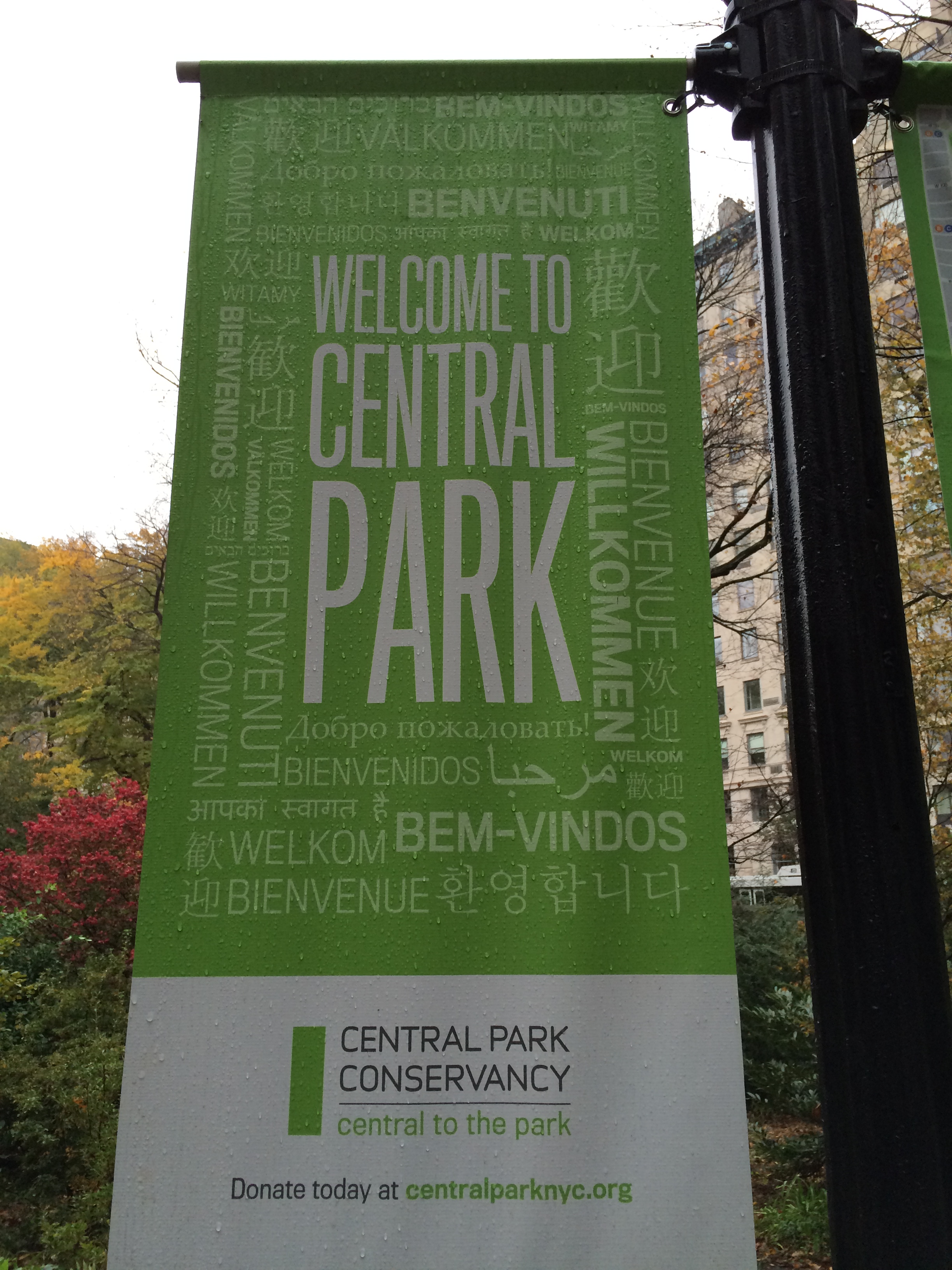
In addition to taking in a fabulous conference, it was also a pleasure to take in some of the sights and sounds of New York City. Here are some of my favorites with photos I took along the way. Enjoy!

Penn Station and Central Station

Penn Station

Penn Station

Central Station

Central Station

9/11 Memorial

9/11 Memorial

9/11 Memorial

Financial District

Wall Street

Wall Street

Zuccotti Park

Zuccotti Park

Historic Churches

St. Patrick's Cathedral

St. Patrick’s Cathedral

St. Patrick's Cathedral

St. Patrick’s Cathedral

Trinity Church Wall Street

Trinity Church Wall Street

Trinity Church Wall Street

Trinity Church Wall Street

St. Patrick's Cathedral

St. Patrick’s Cathedral

The Metropolitan Museum of Art

The Metropolitan Museum of Art

The Metropolitan Museum of Art

The Metropolitan Museum of Art

The Metropolitan Museum of Art

The Metropolitan Museum of Art

The Metropolitan Museum of Art

The Metropolitan Museum of Art

The Metropolitan Museum of Art

The Metropolitan Museum of Art

The Metropolitan Museum of Art

Central Park

Central Park

Central Park

The Mall

The Mall

Boathouse

Boathouse

Bethesda Fountain

Bethesda Fountain

Bethesda Fountain

Bethesda Fountain

Bow Bridge

Bow Bridge

Upper East Side from Central Park

Upper East Side from Central Park

Upper West Side from Central Park

Upper West Side from Central Park

Rockefeller Plaza

Rockefeller Plaza

Rockefeller Plaza

Rockefeller Plaza

Rockefeller Plaza

Rockefeller Plaza

Rockefeller Plaza

Times Square

Times Square

Times Square

Times Square

Times Square

Taxi on the East River

New York Water Taxi on East River

New York Water Taxi on East River

IMG_3204

Manhattan Bridge and the Financial District

Brooklyn Bridge from the East River

Brooklyn Bridge from the East River

Brooklyn Bridge from the East River

Brooklyn Bridge from the East River

Greenpoint, Brooklyn

Greenpoint Sidewalk Clock, on of the few remaining sidewalk clocks left from the 1860s

Greenpoint Sidewalk Clock, on of the few remaining sidewalk clocks left from the 1860s

Street Art in Greenpoint (Brooklyn)

Street Art in Greenpoint (Brooklyn)

The High Line Project

High Line

High Line

Architecture

IMG_1 IMG_2 IMG_3 IMG_4

Washington Square Arch

Washington Square Arch

Washington Square Arch

Final Thoughts

That’s the journey through some of my favorite sights and sounds in NYC. What are your favorites?

Can You Serve God in Your Work?

Faith & Work, by J. Irving, St. Patrick's in NY

Faith & Work, by Justin A. Irving, purposeinleadership.com; location: St. Patrick’s in NYC

Do you see your work as an opportunity to serve God?

Some workers—such as those in overt ministry roles (e.g., pastors, missionaries) or those in helping professions (e.g., teachers, nurses)—seem to have an easier answer to this question.

But what about other professions? How, for example, may plumbers, engineers, writers, carpenters, accountants, programmers, electricians, lawyers, and call center employees see their work as an opportunity to serve God?

Most of us devote upward of 100,000 hours of our lives to work. The significance and meaning of these hours matters. Is this 100,000-hour investment of our lives disconnected from our life of faith, or do these hours connect meaningfully with who we are as persons of faith? In what way is our work a means to living out a vocational call on our lives—a means to serving God in and through our work?

Celebrating Every Good Endeavor

I just returned from a conference hosted by the Center for Faith & Work at Redeemer Presbyterian Church in New York City. What an encouraging time to see how the people of Redeemer Presbyterian are guiding their congregation and city in reflection on innovation and meaningful faith-work integration.

For those new to this conversation, Tim Keller and Katherine Leary Alsdorf, both of Redeemer Presbyterian, have written a helpful book on the topic of faith and work entitled Every Good Endeavor: Connecting Your Work to God’s Work.

Setting the stage for their discussion in Every Good Endeavor, Tim and Katherine propose a diverse set of convictions and pose the question of whether these convictions are opposed to one another or complementary. They note:

The way to serve God at work is to…

  • Further social justice in the world
  • Be personally honest and evangelize your colleagues
  • Do skillful, excellent work
  • Create beauty
  • Work from a Christian motivation to glorify God, seeking to engage and influence culture to that end
  • Work with a grateful, joyful, gospel-changed heart through all the ups and downs
  • Do whatever gives you the greatest joy and passion
  • Make as much money as you can, so that you can be as generous as you can

Engaging this list, Keller and Leary Alsdorf note that it is problematic if we add the word “main” to any of the above statements (e.g., “The main way to serve God at work is to…”). Each of these serve as a way serve God through our work rather than representing the way to serve God in our work. They additionally emphasize that depending on one’s particular vocational path, cultural context, and historical moment, the way we live these convictions out will look different.

A Means for Joyful Exploration

In light of such observations, connecting our work to God’s work becomes a means for joyful exploration rather than burdensome obligation. Our work does matter to God. Our work is a means to serve God. The opportunity in front of us is to explore how our particular role is an opportunity to serve God in and through our work.

Toward this end, I find that the above list is a helpful prompt.

In what ways is my work an opportunity to …

  • . further social justice
  • be honest
  • share the gospel
  • work with excellence
  • create beauty
  • glorify God
  • work with gratitude and joy
  • be generous?

How will you serve God through your work? How will you invest the 100,000-hour opportunity in your life?

Where to Look for Better Performance in Your Work

"Here's looking at you, kid" - Jaskirat Singh Bawa, Flickr

Photo Credit: “Here’s looking at you, kid” – Jaskirat Singh Bawa, Flickr

I read about a unique and interesting study recently. The primary aim of the study was examining the impact of various combinations of employees and customers seeing or not seeing each other while work is performed and how these combinations affect customer satisfaction with the product provided.

An Eye on Cooks and Diners

Researchers Ryan Buell and Tami Kim set up scenarios in a live cafeteria environment:

  • Scenario One: Cooks and diners not in view of one another
  • Scenario Two: Diners only could view cooks
  • Scenario Three: Cooks only could view diners
  • Scenario Four: Diners and cooks both in view of one another

In each of these scenarios, diners would rate the quality of the food. The key finding in this study was that cooks who could view diners while preparing their customer’s food had the highest food quality ratings.

The Extra Ingredient in the Recipe of Work

Of this finding, Buell notes:

“We’ve learned that seeing the customer can make employees feel more appreciated, more satisfied with their jobs, and more willing to exert effort. It’s important to note that it wasn’t just the perception of quality that improved—the food objectively got better.”

Though not difficult to understand, this is a powerful finding from a unique study.

Who Are You Serving through Your Work

Most readers likely will not identify with the specifics of the cook-diner relationship. But all of us can think about the people we serve through our work, whether we are paid or not. Who are the customers, students, members, friends, family, and colleagues who benefit from our work?

The takeaway is the importance of focusing on these people while we work. And, if at all possible, to create an environment where we can regularly see those we serve through our work.

Keeping Your Eye on Your Customer

If you care about adding value to the lives of your customers—those you serve—find ways to keep these people in mind and in view while you do your work. Buell and Kim’s research suggests that you will perform best and provide the best products and services when you do.

Keep your eyes on the people you serve!