6 Characteristics of Organizations with Vision

mind_scratch, Ultima visión, Flickr

Photo Credit: mind_scratch, Ultima visión, Flickr

In a previous post, I highlighted the importance of Leading from the Front with Vision. Focusing on why vision matters, Burt Nanus provides a list of characteristics of organizations with and without vision. Here is a summary of these characteristics:

Organizations with Vision

Organizations without Vision

  • Opportunity-Driven
  • Focused on Change
  • Progressing toward Goals
  • Oriented Strategically
  • Focused on Long-Term Results
  • Proactive
  • Problem-Driven
  • Focused on Stability
  • Focused on Past Performance
  • Oriented Tactically
  • Focused on Short-Term Results
  • Reactive

An orientation toward change, pursuing opportunities, working toward goals, focusing strategically, paying attention to long-term interests, and being proactive tend to go along with visionary focus.

Based on these characteristics, are you embedded in an organization with or without vision? If you are leader, are you guiding your organization with vision?

The Priority of Potential — Spotting Talent for our Organizations

Potential!, Miles Goodhew, Flickr

Photo Credit: Potential!, by Miles Goodhew, Flickr

In a previous post I highlighted 8 Core Leadership Abilities. In the same HBR article, Claudio Fernández-Aráoz engages the important theme of how to spot talent in the 21st century.

A History of Talent Searching

Over the centuries and years, diverse approaches have emerged for identifying leadership and managerial talent. Fernández-Aráoz identifies this progression around four movements:

Focus on Physical Attributes — Those who were fittest, healthiest, and strongest.

Focus on Intelligence and Experience — Those who were the most intelligent, most experienced, and those with the best past performance.

Focus on Testing for Competencies— Those who possess the right set of characteristics and skills associated with predicted job performance.

Focus on Potential  — Those who are ready to engage the VUCA environment of Volatility, Uncertainty, Complexity, and Ambiguity.

Why Potential

In the VUCA world of increased volatility, uncertainty, complexity, and ambiguity, there are new demands on prospective talent. Fernández-Aráoz discusses the factors of globalization, demographic shifts, and challenges to the talent development pipeline. The talent development pipeline is significantly stretched due to increased competition in this changing environment of the 21st century. These factors are forcing organizations to focus on identifying potential (not just track-records of success), and then developing and retaining this talent in the years ahead.

What to Look for When Looking for Potential

So, how is potential spotted? What qualities are the hallmarks of such potential? Fernández-Aráoz identifies the following hallmarks for spotting talent and potential in the 21st century:

Motivation — “…a fierce commitment to excel in the pursuit of unselfish goals.”

Curiosity — “…a penchant for seeking out new experiences, knowledge, and candid feedback and an openness to learning and change.”

Insight — “…the ability to gather and make sense of information that suggests new possibilities.”

Engagement — “…a knack for using emotion and logic to communicate a persuasive vision and connect with people.”

Determination — “…the wherewithal to fight for difficult goals despite challenges and to bounce back from adversity.”

How to Develop those with Potential

Because spotting potential is quickly becoming the new norm, developing this potential talent in our organizations is becoming the highest priority. How are motivation, curiosity, insight, engagement, and determination built upon so that individuals with potential translate into individuals with performance?

Fernández-Aráoz identifies the priority of stretch development. On this point Fernández-Aráoz notes, “when it comes to developing executives for future leadership assignments, we’re constantly striving to find the optimal level of discomfort in the next role or project, because that’s where the most learning happens.” Finding stretching assignments, where those with potential don’t immediately have all the answers, is one of the chief pathways in moving individuals from potential to performance.

______________________________

How are you identifying potential around you? How are you developing this potential into performance?


Cease Striving — Calling Leaders to Rest

Rest Here, Esther Simpson, Flickr

Photo Credit: Rest Here, by Esther Simpson, Flickr

“Cease striving and know that I am God.” – Ps. 46:10

Getting Things Done

As leaders, we tend to be achievers. We tend toward making things happen… toward work… toward activity… toward doing… toward performance… toward striving.

Of course, these characteristics have some very positive dimensions to them. Things tend to get done. Teams tend to perform. Organizations tend to run well. But can there be too much of a good thing when it comes to this leadership tendency?

Too Much of a Good Thing…Cease Striving

For Christian leaders, it is important to remember that leadership does not just happen by human effort and work. The reality of God’s existence changes the leadership equation for our lives as leaders and for our organizations. Christians believe in a God who does not simply sit back and watch His people work. Rather, Christians believe in a God who not only watches, but He is also engaged in the work itself.

The verse quoted above calls us to be still, to cease striving, and to know that God is God (Ps. 46:10). We are called to trust that God is at work even when we are not. We are called to trust that God is in control even when we feel we are not. We are call to take the attention off of ourselves and our striving, and transfer that attention to God who is actively engaged in our lives, organizations, and world.

He Gives to His Beloved Even as They Sleep

Beyond Psalm 46, there are many other passages in the Bible that remind us as leaders that striving is not always the answer. Sometimes the answer is resting rather than striving, because God is at work even when we are not.

One of my favorite passages on this point is Psalm 127:2…

It is vain for you to rise up early, To retire late, To eat the bread of painful labors;
For He gives to His beloved even in his sleep
.”

What a powerful reality. God gives to us, even when we sleep. God works while we rest.

Some versions translate the end of this verse as “he grants sleep to those he loves.” The reality is both concepts are true and powerful. He gives us sleep. He gives to us and our communities while we sleep.

Resting in the One Who Works

As leaders who work hard during the day, we should take time to “cease striving” and to rest. We should cease our work and go to sleep in peace knowing that:

  1. God grants sleep to his beloved, and
  2. Even in our sleep, God is still working on behalf of those who are resting in Him.

Good Theology = Good Rest

What powerful theology for those in need of rest. As leaders, we need to be able to shut down and rest. We need to be shut down and spend time with friends and family. We need to be able to shut down and sleep.

Leaders who believe the entire story of leadership success is written by their own effort will struggle to find the rest and restoration they and their people need. As we trust that God is at work, even when we are not, then the rest we need as leaders will be found by relying on the one who graciously works on our behalf.

Are you finding your rest in the Lord? Are you waiting on the one who is able to work for you? Are you finding refreshment by resting in the one who gives to His people even while they sleep?

Visionary Change with a Plan: Remembering the Importance of Effective Management in the Change Process

Change, SomeDriftwood, Flickr

Photo Credit: Change, SomeDriftwood, Flickr

Change agendas often fail due to good visions that lack a thoughtful plan. I observed this in some of my previous work with smaller nonprofits. In these contexts, leadership energy was devoted to generating new ideas and visions for the future but there was not sufficient managerial energy devoted to plans that would support the enactment of vision.

Doing things Right

Peter Drucker noted that management is doing things right while leadership is doing the right things. Although leadership is focused on doing the right thing and casting appropriate visions for change, it is often management that focuses on doing things right. Change initiatives that are launched but not sustained often fail due to lack of effective planning and lack of doing things the right way.

Consistent with Drucker’s observations, John Kotter highlights the central functions of leaders and managers. Leaders focus on setting direction, aligning people, and motivating people. In contrast to this, managers plan and budget, organize and staff, and control and problem solve. Successful change efforts are not focused on only one of these lists, but rather both. Successful change efforts are not focused on leadership or management, but rather effective leadership and effective management.

Change Initiation and Change Implementation

Since leadership tendencies of setting direction often initiate change agendas, it is easy for change failure to occur in the absence of management. Without leadership, change fails due to lack of initiation. Without management, change fails due to lack of implementation.

What change vision are you pursuing as a community? Are you pursuing both effective initiation and implementation? How are you pursuing the change visions with a plan?

Why I Blog: Fostering Healthy Leadership

Be the Change, Feggy Art, Flickr

Photo Credit: Be the Change, Feggy Art, Flickr

“Leadership is one of the most observed and least understood phenomena on earth.”
– James MacGregor Burns

James MacGregor Burns’ quote resonates with most of our experiences. We see leadership occurring all around us, but rarely take time to reflect in a systematic way on what makes this leadership helpful or unhelpful—effective or ineffective. Further complicating our observations, at times we see people leading well who have no formal positions of leadership within our organizations, and at other times we see people in positions of leadership who really are not providing the necessary leadership direction for our organizations as we move into the future.

Lingering Questions

And so we come back to Burns’ comments: Leadership is one of the most observed and least understood phenomena on earth. But must it be this way? Is leadership simply a mysterious reality? Is it something that we simply know when it is going well or poorly, but will never really understand what makes it work? Or might we be able to provide some basic descriptions of the form and shape of good, helpful, and effective leadership? Might we be able to get at some minimum factors that characterize both what helpful leaders and leadership look like?

Leadership Can Be Learned

Part of my vocational calling is providing thoughtful responses to such questions. I believe leadership can be described and studied. I believe it can be learned. Not every person is wired to be a capital “L” Leader. However, just about everyone embedded in an organization, group, or family can grow in and learn how to positively influence and guide the people around them.

This is the heart behind why I’ve started blogging at purposeinleadership.com. Although I’ve been observing leaders in action most of my life, I’ve spent the last 15 years in focused study on the topic through various degree programs, organizational roles, research agendas, and teaching opportunities. I want to start sharing some of these lessons learned with a wider audience.

A Passion for Ridding the World of Bad Leadership

Harvard Business Review’s editorial mission is “to rid the world of bad management.” I have a similar passion in the area of leadership. Though I won’t be able to personally rid the world of bad leadership, I’d love to make a dent in this ambitious agenda. I want to spread a message…

  • …that leadership is more about serving others than being served,
  • …that people are the priority even in profit-driven sectors,
  • …that leaders need to create organizations and societies that are not only productive, but also are fit for human beings,
  • …that purpose in leadership is of central importance,
  • …that leadership is vital in organizations that create value for those they serve,
  • …that people will endure great hardship and sacrifice when they believe in what they are doing and feel their work and leadership has meaning and purpose,
  • …that leaders have a God-given responsibility to care for the people they lead,
  • …that core leadership characteristics and behaviors can be described,
  • …that leadership is vital in working toward human flourishing in organizations and societies.

Thanks for Joining Me in this Pursuit

Although I don’t believe that everything rises or falls on leadership, I do believe that the pursuit of effective and healthy models of leadership is a first-order priority in our day.

Thanks for joining me on this journey toward good, helpful, and effective leadership. Our organizations and the people we serve as leaders deserve our very best!

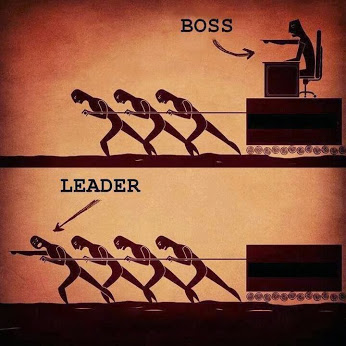
Leading from the Front … Leading with Vision

Leadership vs. Management, on Flickr

Photo Credit: Leadership vs. Management, on Flickr

Leading from the front requires leading with vision!

Engaging the question, “Why does vision matter?” Burt Nanus offers the following reflection:

Vision is the main tool leaders use to lead form the front. Effective leaders don’t push or production their followers. They don’t boss them around or manipulate them. They are out front showing the way. The vision allows leaders to inspire, attract, align, and energize their followers—to empower them by encouraging them to become part of a common enterprise dedicated to achieving the vision.”

In this brief post I encourage you to consider whether you’re leading from the front or whether you’re leading from behind. Are you calling people to an inspiring vision of what can be, or are you pushing and prodding followers to do what they really are not committed to already?

Vision helps to motivate followers intrinsically rather than extrinsically. Vision helps to lead from the front!

8 Core Leadership Abilities

Follow the Leader, by Vinoth Chandar, Flickr

Photo Credit: Follow the Leader, by Vinoth Chandar, Flickr

In a recent issue of Harvard Business Review, Claudio Fernández-Aráoz identifies 8 abilities that the best leaders possess. Here is the list, along with a brief description and summary of each item on the list.

  1. Strategic Orientation: The capacity to engage in broad, complex analytical and conceptual thinking.” The new realities surrounding organizations demand that leaders have a capacity to engage in strategic thinking in the face of complexity.  Are you thinking about your organizational realities through a strategic lens?
  2. Market Insight: A strong understanding of the market and how it affects the business.” Along with increased complexity, the world is more connected to our organizations than ever before. Are you paying attention to the environment surrounding your organization and how this environment will shape the way your organization goes about its work?
  3. Results Orientation: A commitment to demonstrably improving key business metrics.” Increases in complexity and connectivity in our world translate into increased competition. This increased competition necessitates that leaders pay attention to performance for the things that matter to your community. Are you measuring what matters most to your organization?
  4. Customer Impact: A passion for serving the customer.” In-grown organizations will struggle to thrive in the changing economy. Who do you serve as an organization? Do you have a passion for providing the best possible service for these individuals and communities?
  5. Collaboration and Influence: An ability to work effectively with peers or partners, including those not in the line of command.” Leadership in today’s organizations is not simply about individuals getting individual work accomplished. Complex problems require complex solutions that are often worked out in collaboration. Do you possess a collaborative orientation?
  6. Organizational Development: A drive to improve the company by attracting and developing top talent.” Finding, recruiting, and retaining top talent is a substantial need in the coming years. Factors such as globalization and demographic shifts are making this need more pronounced. How are you leading your organization in a path of intentional leadership development?
  7. Team Leadership: Success in focusing, aligning, and building effective groups.” As noted above related to collaboration, it is no longer about individuals accomplishing individual outcomes. Organizations today require effective groups or teams working together to accomplish increasingly complex outcomes. Are you developing your capacity as a team player?
  8. Change Leadership: The capacity to transform and align an organization around a new goal.” Our changing world translates into dynamic and changing organizations. How are you developing your change leadership capacity? As a community this will be essential as you lean into these organizational and environment transitions?

As the world around us changes, a capacity to adapt to new environments is critical. As you consider these 8 Core Leadership Abilities, what are your strengths? What are your growth edges? Are you committed both to developing yourself and those around you to meet the demands of leadership today?

Chaos, Creativity, and Connectedness: Learning to Embrace the New Organizational Story

From Chaos to Order, Sebastien Wiertz, Flickr

Photo Credit: From Chaos to Order, Sebastien Wiertz, Flickr

I enjoyed reading Margaret Wheatley’s book Finding our Way: Leadership for Uncertain Time recently. Wheatley discusses at length the important shift from old stories to new.

The Old Organizational Story

The old organizational story that Wheatley emphasizes is a mechanistic story in which a desire for predictability and consistency is pursued. Wheatley notes, “We want a story of simple dimensions: People can be viewed as machines and controlled to perform with the same efficiency and predictability.” As efficient as this goal or desire seems, Wheatley notes that there is one major problem with it: “people never behave like machines,” and when we try to have them act like machines we “ignore the deep realities of human existence” and “take the complexity of human life and organize it away.”

The New Organizational Story

In contrast to this old story, Wheatley is calling for a new story that is a tale of life…one where the complexities of human life are embraced and welcomed rather than controlled and managed away. Wheatley notes that, “Life seeks organization, but it uses messes to get there. Organization is a process, not a structure.” When we, as leaders and managers, simply try to mechanistically structure organization, we often work against rather than with the larger patterns of organization at work in the world.

On this point, Wheatley notes, “Self-organizing systems have the capacity to create for themselves the aspects of organization that we thought leaders had to provide. Self-organizing systems create structures and pathways, networks of communication, values and meaning, behaviors and norms.” In such a model, Wheatley is arguing for the importance of both creativity and connectedness in the life of the organization.

Pursuing Creativity and Connectedness

Pursuing creativity and connectedness feels messy and can feel at odds with the need for stability and consistency. This is one of the largest challenges. As leaders and organizations, are we willing to let go of perceived order pursued through mechanistic means in order to find deeper and more authentic order through more organic means?

Organizations and Chaos Theory

Chaos seems to be a threatening concept for many organizational leaders, but Wheatley reminds us that sometimes the deepest order is found in the midst of self-organizing systems that seem quite unorganized. In Leadership and the New Science: Discovering Order in a Chaotic World, Wheatley points to realities in our world such as fractal and spiraling structures that manifest deep order from what seems chaotic at first glance. Although seemingly at odds with our desire to pursue organizational structure through mechanistic means, Wheatley challenges us to look for order where we typically see chaos.

Pursuing Meaningfulness—What Matters Most

One final point: I love Wheatley’s emphasis on creativity being found through meaning. “As soon as people become interested in an issue, their creativity is engaged. If we want people to be innovative, leaders must engage them in meaningful issues.” Rather than having to prod and production followers through extrinsic means in the mechanistic model, tapping into what is meaningful allows us to pursue creativity through intrinsic motivation of opportunities that are meaningful in a more organic model.

_______________________

How do you respond to Wheatley’s arguments? Looking to the new story and themes surrounding chaos, creativity, and connectedness can feel uncomfortable at first, but I encourage you to give it time and thought. Sometimes the most power insights come to us in unexpected ways.

Follower Motivation and Leader Humility

Humanity, Love, Respect (B.S. Wise, Flickr)

Photo Credit: Humanity, Love, Respect, by B.S. Wise, Flickr

The challenges leaders face in developing motivation and empowerment among followers are many.

There may be challenges in the interpersonal or dyadic relationship between individual leaders and followers. There may be challenges within the team or group environment at any of the forming, storming, norming, or performing stages. There may be challenges at the level of organizational systems within which leaders and followers are embedded. Or, there may be challenges external to the organization such as a difficult economic environment straining follower and leader expectations of performance.

Beginning with Leader Self-Reflection

While each of these levels may be challenges to motivation and empowerment, leaders should begin by considering their own role in leadership challenges. In a previous post I argued that Effective Leadership = Effective Self-Leadership. When leaders face challenges in motivating and empowering followers it is important to first look to themselves as leaders—to begin seeing how they personally may have contributed to demotivating followers. The Bible makes this priority personal: “Why do you see the speck that is in your brother’s eye, but do not notice the log that is in your own eye?” (Matthew 7:3).

As a leader,
are you prone to look first to the proverbial speck in a follower’s eye,
or the log in our own eye?

Avoiding the Fundamental Attribution Error

In challenging times it is easy to look to others or our environment and assign fault to them. This tendency is described by some as the fundamental attribution error or actor-observer bias. But thoughtful leaders are self-reflective leaders. They resist the fundamental attribution error and consider how they personally may be contributing to a problem and how followers may be impacted by their environment. They are leaders willing to look first to their contribution to a situation and work out from there to other relevant contributing factors.

Desiring Personal Humility

In light of such logic, we might argue that the greatest challenge to motivating and empowering followers is me and you. It is about self-reflection and self-leadership first. Jim Collin’s notes this point in his book Good to Great. At the heart of Collins’ work is the concept of level five leadership. Collins describes Level Five Leaders as having a unique blend of both professional will and personal humility. With such a blend, a leader has the self-confidence and self-efficacy to own that they do not have all of the answers and that they have less control than they may have originally thought. They also are willing to look into the mirror and see what their contribution is to the lack of motivation among followers.

Pressing Forward with Personal Humility and Follower Motivation

As leaders engage in personal reflection, embrace a spirit of humility, and acknowledge their own contribution to challenges … powerful result emerges. Rather than thinking less of leaders, followers generally grow in their respect for leaders who demonstrate authenticity and a willingness to own their part in challenges. Along this path, leaders begin by truly recognizing where actual power lies—with the wider organizational membership and not just leaders. From this place, leaders are able to motivate followers in authentic and meaningful ways. This motivation may take the form of genuinely valuing and developing people. It may also take the form of channeling followers to orient their attention on vision and performance that matters to them and the organization.

_______________________________

Leader self-reflection and humility is a key starting point in making such motivation and empowerment come to life. Have you seen positive examples of leader humility in your organizations? What impact did this have on the community and the overall motivation experienced by organizational members?

Effective Leadership = Effective Self-Leadership

Reflection "I", VisualAge Flickr

Photo Credit: Reflection “I”, VisualAge Flickr

There is one prerequisite for managing the second half of life;
You must begin doing so long before you enter it.”

– Peter Drucker

Peter Drucker brought an insightful voice to management studies in the 20th century. One of my favorite articles by Drucker is a Harvard Business Review piece called “Managing Oneself.”

Drucker argues that there is an explicit connection between excellence in management and the cultivation of understanding of oneself. To extend this, we might argue that effective leadership begins with effective self-leadership. Or, put as a question…

How can I lead others well if I am not first leading myself well?

A commitment to such a question leads to critical self-management questions. Drucker raised the following self-management questions in his article:

  1. What are my strengths?
  2. How do I perform?
  3. How do I learn?
  4. What are my values?
  5. Where do I belong?
  6. What should I contribute?

Of these questions, I would argue that knowing ones strengths and values is a top priority for leaders.

Attending to Our Strengths

Regarding strengths, Drucker notes, “To do things well, you’ll need to cultivate a deep understanding of yourself,” and “only when you operate from strengths can you achieve true excellence.” Understanding strengths allows us to build on the positive dimensions already present in our lives rather than working to improve deficits. On this point Drucker notes, “It takes far more energy to improve from incompetence to mediocrity than to improve from first-rate performance to excellence.” In the pursuit of leadership excellence, building on strengths is a first order priority for those engaged in self-leadership.

Attending to Our Values

But strengths are not the only story. Strengths must be grounded in the things that matter most to us and our communities—our values. On this point, Drucker notes, “What one does well—even very well and successfully—may not fit with one’s value system.” Strengths and skills must be guided by values. Values should form the basis for understanding and applying our strengths. Strengths applied without values can quickly lead to ethical and moral violations in leadership. Strengths applied in congruence with deeply held values provide a basis for our natural talents to serve rather than abuse the communities of which we are part.

Effective leadership begins with effective self-leadership! Are you attending to your strengths? Are you attending to your values?

______________________________

I’d love to hear how you have engaged effective self-management and self-leadership in your life and work!