
Power to the People — Leaders and the Ethical Use of Power

Vuisten (fists) - Power, by Bolwidt on Flickr

Photo Credit: Vuisten (fists) – Power, by Bolwidt, Flickr

Power to the People

The public exercise of power is often disliked, mistrusted, or undermined in our society. Roots of this suspicion of power are deep, but this suspicion is often grounded in the exercise of positional power that is not founded upon personal power. It is distasteful to see people occupying positions of power without also embodying the personal credibility to support and enact this power effectively. In contrast to resistance that is often the result of excessive use of positional power, personal power helps to develop followers and their commitment to organizational goals.

Asking the Right Questions

In terms of when and how power can be used most effectively and more acceptably, I would point to the importance of the ethical use of power. On this point Richard Daft identifies key questions leaders need to ask. Some of these questions ask whether the action and use of power…

  • …is consistent with the organization’s goals,
  • …respects the rights of individuals,
  • …meets standards of equity and fairness, and
  • …is consistent with how one would behalf if the action would affect them personally.

These guidelines for ethical action help in thinking through how power is being utilized. To engage power effectively, acceptably, and ethically, leader’s need to be comfortable that the answers to such questions are focused on the good of others and the organization rather than simply serving themselves as leaders.

A Commitment to Serving Others

On this point, I appreciate the emphasis of people like Robert K. Greenleaf who write on the theme of servant leadership. Greenleaf emphasized that the servant leader was to be servant first. In other words, Greenleaf emphasized that the most acceptable or beneficial leader for a community is the one who at their core is a servant, and who then expresses this servant-oriented heart through a leadership role. Greenleaf emphasized that true power rested with followers who recognize a servant-oriented person and then attribute personal power to them. From this personal power, the servant-leader may then lead effectively and ethically.

In my view, this is the best place from which to use power—using it from a place that recognizes the best power is that which has been freely granted to the leader by the personal trust of followers.

_______________________

What do you think of Greenleaf’s point? How do you see leaders using power ethically and responsibly?

5 Types of Leadership Communication

Communication by Krossbow, on Flickr

Photo Credit: Communication, by Krossbow, Flickr

In a previous blog post I highlighted 7 Levels of Leadership Communication. In this post I will highlight 5 Types of Leadership Communication.

As leaders, communication is a central skill for accomplishing the goals and outcomes our organizations desire. We are tempted to view communication in very monolithic ways such as COMMUNICATION = TALKING. However, in the flow of leadership, communication is more nuanced than this. Yes, it includes talking, but there are other types and levels at which communication does and must take place.

Here are 5 categories or types of leadership communication.

1 — Verbal & Nonverbal

The first type of communication is verbal and nonverbal. Whether you want to or not, as a leader you are always communicating. This may be happening with your words, or it may be happening with your nonverbal cues. How many times have you been in a meeting with someone who is constantly looking at their watch or looking out the window rather than paying attention to the conversation in which they are engaged? Such nonverbal cues communicate powerfully. They powerfully communicate disinterest and lack of engagement.

As leaders, both our verbal and nonverbal communication matter immensely. What are you communicating with your words? What are you communicating with your nonverbal cues? Is there continuity or discontinuity in these threads of communication?

2 — Intentional & Unintentional

Communication may be verbal or nonverbal. It also may be intended or unintended on the part of the leader. This is the second type—intentional and unintentional communication. Saying the thing we wish to say, in the way we wish to say it, at the time we wish to say it is one example of intentional communication. But it does not always work this way in leadership. Sometimes we unintentionally say the wrong thing, in the wrong manner, or at the wrong time. Other times we may unintentionally communicate conflicting messages—saying one one with our words intentionally and another message with our actions non-verbally.

Our intentional and unintentional communication are both important. What are you communicating intentionally? Are you aware of what is communicated unintentionally?

3 — Conscious & Unconscious

The third type of communication is conscious and unconscious. This third type of communication builds on the above foci. Verbal, nonverbal, intentional, and unintentional communication can take place either consciously or unconsciously. I may be communicating something both nonverbally and unintentionally, but still be aware of it. The real challenge to leaders is that which is communicated unconsciously. This takes intentional effort to address. Such effort may take the form of inviting others to observe us and give us feedback. Unconscious communication may support our leadership goals, or they may be working against us. Others can help us pay attention to our approach to communication.

The discussion of conscious and unconscious communication relates to a concept known as the Johari Window. The blind spot and unknown quadrants in the table below represent unconscious areas. When we are communicating at these levels, especially when we communicate negatively, it is important to invite the feedback of others so that we may raise these areas to the conscious level and proactively improve the leadership message communicated.
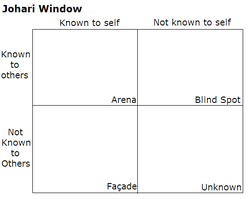
Johari Window image, from Wikipedia

Johari Window image, from Wikipedia

4 — Action & Inaction

The fourth type of communication is action and inaction. As with the above types of communication, effective leadership communication practice must pay attention to both action and inaction. Kouzes and Posner emphasize the priority of modeling the way in their book The Leadership Challenge. Modeling the way is an example of positive action communicating a desired leadership message. However, inaction also communicates powerfully. For example, if a leader consistently avoids confronting unhelpful or unethical behavior on a team, this inaction communicates a powerful  and negative message to other team members seeking healthy and ethical team performance.

How are you communicating as a leader through your actions? What leadership messages are communicated through your inaction? What needs to change in light of these observations?

5 — Head & Heart            

The final type I’ll note is head and heart communication—communication at both the cognitive and affective levels. This distinction acknowledges that leaders communicate both cognitively and affectively. They communicate at both the level of the head and the heart. Challenges arise when leaders are communicating at one level while followers need another. In some ways, this distinction relates to the dimensions of intellectual stimulation and inspirational motivation within transformational leadership theory. At times, followers may be need affective, heart-oriented, and inspirational motivation from their leader. Challenges arise when leaders communicate in just the opposite manner—communication at the cognitive, head-oriented, and intellectual level. Leaders must look not only to what needs to be said and how they as leaders need to say it. Leaders must also look to how followers and organizational members need to hear a message.

Do you tend to communicate more cognitively or affectively? Are you emphasizing your personal communication style preference in this area as a leader, or are you providing your community and followers with the type and style of communication that they need? Thinking of the head-heart category of leadership communication is one approach for adjusting to follower needs.

____________________

In light of the 5 Types of Leadership Communication noted above, what areas are your strengths? Which types are your growth edges? Are you inviting trusted friends and peers to give you feedback on how you communicate with others and how you may grow as a leadership communicator?

I’d love to hear how you approach navigating the complexities of leadership communication. Share your thoughts when you get a chance.


Leadership & Management

Lead the Way

Photo Credit: 3D Team Leadership Arrow Concept, Scott Maxwell, Flickr

The conversation surrounding leadership and management is an important one. While management was a major emphasis in the 20th century, focusing on stability and control, leadership has come to the forefront later in the 20th century and into our current time. In contrast to stability and control, leadership emphasizes valuing change, valuing people, empowerment of people, and the central place of relationships in organizational life.

Leadership and Management Described

John Kotter provides a helpful overview of the distinction between leadership and management. Management’s orientation around stability and control is characterized by dimensions such as (a) planning and budgeting, (b) organizing and staffing, and (c) controlling and problem-solving. leadership’s orientation around people, empowerment, and relationships is characterized by (a) direction-setting, (b) aligning, and (c) motivating.

Processes vs. People

While management focuses on stability and efficiency of processes, leadership focuses on navigating people and systems toward change and insuring that the team or organization is focused on the right things. The language of processes and people is also helpful. Management tends to be more process and object focused; leadership tends to be more people and human resource focused.

Efficiency vs. Effectiveness

The temptation is to raise one of these as more important than the other. Organizations and followers need both stability (management) and change (leadership). Organizations and followers need both efficiency (management) and effectiveness (leadership). In contrasting the two, I think my natural tendency is to focus on the big picture and whether or not we are making progress toward the right goals for our community. Because of this, I need to regularly and intentionally ensure that the managerial side of my departments is not being lost in the leadership emphasis.

Pursuing Both in Your Practice

Whether we tend toward leadership or management, we need to remember that our organizations need both. Make sure that you know your tendency so that you may give attention to balancing this out in your own practice and through the diverse people brought onto your team.

Purpose in Leadership and Work

Work with Purpose

Photo Credit: Work, by Sean MacEntee, Flickr

In the Handbook of Leadership Theory and Practice put out by Harvard Business School, chapter authors Podolny, Khurana, and Besharov discuss at length the challenges associated with separating the concepts of meaning and leadership and focusing primarily on the relationship of leadership and performance. In a drive toward performance (an overall good emphasis), leadership scholars and practitioners often have lost sight of the importance of meaning in leadership and work. A clear sense of the meaningfulness of work is vital for organizational members. Understanding purpose in leadership and work contributes to job satisfaction and an authentic belief that the work one does matters and is meaningful.

Providing this sense of meaning is a primary responsibility of leadership. While other organizational roles and responsibilities may connect with issues of performance more explicitly, as Podolny and his co-authors assert, this is not the only issue to address or question to answer. Performance and purpose are both essential for employees. People should be able to connect their actions in work to their ideals in life at a metaphysical level. People should also be able to connect their actions at work to their lives at a community and relational level. Leaders help to provide a context within which these meaning-connections may be made. I desire to provide this type of context for those with whom I work. I desire that I and my colleagues feel that our work matters, and is not simply a way to draw a paycheck. I want to have a focus on both getting things done (performance) but also going about this work in a way that taps into the threads of meaning and purpose in our lives.

How do you lead and manage with purpose? How do you help your people connect their work with meaning and purpose in their lives?

Leadership Insights from the Book of James

Photo Credit: First edition King James Bible, 1611, by bookchen, Flickr

Photo Credit: First edition King James Bible, 1611, by bookchen, Flickr

The Book of James is a significant example of a church leader who longed to exert positive leadership influence at a distance. Through this early form of distance leadership in the form of a letter, James is wanting to communicate a vision for how followers of Christ are to live faithfully under God’s leadership within their diverse and global contexts. Noting his audience as the twelve tribes in the Dispersion, James communicates visionary direction, helps to align the people of God behind this vision, and seeks to motivate those who are struggling in various ways. Here are a couple themes that stand out in reading James’ letter.

Rightfully Orienting Ourselves before God

While most leadership books do not begin with a discussion of rightfully orienting ourselves before God, James’ letter does communicate this near the start of his letter. James notes, “If any of you lacks wisdom, let him ask God” (1:5). As leaders, we must understand the source of the visionary direction we provide for followers and our communities. Although leaders gain visionary insight from many sources, the implication of James’ teaching is that God is to be sought out for wisdom when individuals (including leaders) lack wisdom. My viewing God as a source for “every good gift and perfect gift” (1:17), includes viewing God as a source for leadership wisdom when wisdom is lacking.

There are many times I face challenging decisions in leadership—times where I feel like the answer is not immediately clear and I “lack wisdom” related to the situation I’m facing. James’ reminds us that we do not need to be alone in these moments. I can invite the Lord’s guidance as I face decisions that impact the lives of followers and the lives of organizational members I desire to serve. I can, drawing on James’ advise, “ask God” in prayer for wisdom and insight, and ask for peace and clarity in the face of anxious organizational times and unclear organizational decisions.

Rightfully Orienting Ourselves toward One Another

James not only advises people toward rightfully orienting themselves toward God, but also rightfully orienting themselves toward one another. Some examples of this in James are (a) the call to not show favoritism or partiality (2:1), (b) erring on mercy over judgment (2:13), (c) recognizing that the people we work with and lead are made in the likeness and image of God, have great worth and value because of this, and therefore we should bless rather than curse those around us (3:9-10), (d) treating those who work for us fairly and equitably (5: 4), and (e) and caring for the suffering and those in need (5:13-16; 1:27).

Leaders who rightly orient themselves before God and toward others are in a good position to lead humbly (4:6-7) before God and others and recognize that they are not in the task of leadership and management alone. I desire this in my own life and leadership, and am thankful for perspective from sources like James.

What leadership insights do you see in the Book of James?

People, Planet, and Profit — Business Leaders and Sustainable Economics

United States Capitol

Photo Credit: United States Capitol, Justin A Irving, purposeinleadership.com

Today I had the pleasure of meeting with a group of business and political leaders at the United States Capitol in Washington, DC. Facilitated by The Washington Institute, a group of leaders who are interested in the integration of faith and work gathered to hear insights from key leaders in Washington.

Economics of Mutuality

One of these senior business leaders was Jay Jakub of the Mars Corporation who shared a great deal about the corporation’s thinking on the economics of mutuality. Jakub began by noting that if you want to make money for a year you ask one set of questions, but if you want to make money for 100 years you ask different questions. The 100-year questions revolve around mutuality and sustainability, and challenge the purely profit-driven approach to business rooted in Milton Friedman’s economic theory.

A Triple Bottom Line

To summarize the in-depth presentation we heard, Mars is aggressively piloting and pursuing a Triple Bottom Line approach to business and economics.  While a single bottom line approach is the norm in most business—particularly within publicly traded companies—Mars and other corporations are growing in also taking the bottom line of people and planet seriously as well. Taking profit, planet, and people seriously in the corporate environment means identifying and implementing metrics to measure performance in all three bottom line variables of People, Planet, and Profit.

Triple-Bottom-Line

The Triple Bottom Line & The Economics of Mutuality

Myopic Economics

Economic approaches that isolate only one of these variables will err. A profit-only approach to business burdens people and damages the environment. A planet-only approach to business often is unsustainable because it is not profitable, and because the lack of sustainability will not serve people. A People-only approach sounds helpful, but often lacks environmental consciousness and likely will fail in the long run due to an absence of profitability.

Holistic Economics

The key insight I took away from this interaction with Jay Jakub is to pursue business economics in a holistic manner. Pursuing only one bottom line priority is myopic (People, Planet, OR Profit) and is driven by short term questions in pursuit of short term solutions. In contrast to a myopic and short term approach, pursuing the Triple Bottom Line of People, Planet, and Profit leads to a business economic model that is bearable, equitable, viable, and ultimately sustainable.

I’m hopeful that Mars and many other companies will make a successful transition from the single bottom line to the triple bottom in the next decade. Societal, economic, and human flourishing in our world under God’s care will benefit greatly from such transformation!

Organizational Culture vs. Organizational Identity

It is vital that organizational leaders understand the distinction between organizational identity and organizational culture.

Organizational Identity is the visible and public dimension of an organization. It is captured by what is included in its public documents, websites, and public forms of communication.

Organizational Culture is the deeper essence of the organization, often present at the unseen or unconscious levels of organizational life. In his book Organizational Culture and Leadership, Edgar Schein argues that organizational culture is essentially “…the accumulated shared learning of a given group” and “its pattern of shared, taken-for-granted basic assumptions.”

With this distinction of organizational identity as a public dimension and organizational culture as a sometimes unseen dimension, I use the iconic metaphor of an iceberg to capture this thought and distinction. Leaders who are only paying attention to the organizational identity that is above the waterline might inadvertently collide with the underlying organizational culture. Leaders must pay attention to both dimensions—both above and beneath the waterline.

Photo Credit: IMG_2863, by ravas51, Flickr

Photo Credit: IMG_2863, by ravas51, Flickr

Leaders must not only be aware of and communicate the public identity of their organization, they must also be aware of how this stated identity is either ALIGNED OR MISALIGNED with the actual organizational culture.

Organizations sometimes assert organizational identities that are more aspirational than actual. In one sense, this is helpful. We want to strive for improvement as individuals and as organizations. The leadership danger, however, is when the gap between aspirational identity and actual culture is unseen by the core leaders of the organization.

As leaders, we need to raise our awareness of where organizational identity and culture are aligned and where they are misaligned. Where there is alignment, let’s celebrate and tell the story. Where there is misalignment, let’s lead our communities toward our organizational aspirations with visionary determination.