Taking the Next Step — How to Improve Individuals and Organizations

Photo by Justin Irving; new Vikings Stadium in process.

Photo by Justin A. Irving; new Vikings Stadium in process.

One of my favorite quotes from W. Edwards Deming is “Your system is perfectly designed to give you the results you’re getting.” What a great reminder. And, this helpful reminder raises a key question: What are your results telling you?

Deming is a key figure in operations management and the pursuit of continuous improvement within operational systems. Management theories like Total Quality Management (TQM) and beyond have been significantly shaped by Deming’s key principles. While Deming’s work is primarily designed for macro operational settings, the lessons are helpful for both organizations and individuals. What are your results telling you organizationally? What are your results telling you individually?

Here are a few highlights from Deming I offer for your consideration

Deming’s 14 Key Principles

Deming is known for 14 Key Principles in his approach to management. I will not review all of these here since they get into specific dimensions of organizational operations. However, here are a few high points of these principles from Deming’s book Out of the Crisis.

  1. Prioritizing the Creation of Constancy of Purpose: “Create constancy of purpose toward improvement of product and service, with the aim to become competitive and to stay in business, and to provide jobs.” Improvement at the organizational and individual level does not come by constantly changing focus. Deming’s first point reminds us of the importance of staying the course, remaining focused, and keeping our aims before us. Are you constantly changing your aims, or are you maintaining constancy of purpose and staying focused on what matters most?
  2. Committing to Improve Constantly: “Improve constantly and forever the system of production and service, to improve quality and productivity, and thus constantly decrease costs.” Whether at the organizational or individual level, what problems or challenges exist in the system? If “your system is perfectly designed to give you the results you’re getting,” then what problems need to be addressed and are you asking this question regularly?
  3. Taking Action toward Transformation: “Put everybody in the company to work to accomplish the transformation. The transformation is everybody’s job.” If, as noted above, we have identified the problems holding us back, then it is time for action based on these identified problems. Deming’s final point is a call to action. If at an organizational level, this means focusing everyone’s attention on the problems that need to be addressed and the transformation that is desired. If at an individual level, this translates into prioritizing desired outcomes and shaping our decisions and actions toward this desired transformation.

Deming’s Wheel (P.D.C.A.)

Deming's Wheel

In addition to Deming’s 14 Key Principles, another helpful lesson from Deming’s thinking is Deming’s Wheel. Deming’s Wheel is a four stage process focused on (1) planning, (2) doing, (3) checking, and (4) acting, and helps to simplify core steps along a path of continuous improvement.

  • Plan: Plan an improvement
  • Do: Do the activity planned
  • Check: Check the results of this activity
  • Act: Act on these results in order to make future improvements

Whether at the organizational or individual level, Deming’s Wheel of PlanDoCheckAct provides a memorable model for engaging in continuous improvement. Consider what transformation you desire in your life or in your organization. (1) Make plans for an improvement. (2) Do the planned activity toward this improvement. (3) Check the results of the activity you did. (4) Act/Revise your future planning based on the observed results.

Your system is perfectly designed to give you the results you’re getting.” What are your results telling you? Perhaps Deming’s approach to continuous improvement will provide you with some practical insights on how to take the next step toward improvement both organizationally and individually. It’s time to Plan – DoCheckAct.

Where to Look for Better Performance in Your Work

"Here's looking at you, kid" - Jaskirat Singh Bawa, Flickr

Photo Credit: “Here’s looking at you, kid” – Jaskirat Singh Bawa, Flickr

I read about a unique and interesting study recently. The primary aim of the study was examining the impact of various combinations of employees and customers seeing or not seeing each other while work is performed and how these combinations affect customer satisfaction with the product provided.

An Eye on Cooks and Diners

Researchers Ryan Buell and Tami Kim set up scenarios in a live cafeteria environment:

  • Scenario One: Cooks and diners not in view of one another
  • Scenario Two: Diners only could view cooks
  • Scenario Three: Cooks only could view diners
  • Scenario Four: Diners and cooks both in view of one another

In each of these scenarios, diners would rate the quality of the food. The key finding in this study was that cooks who could view diners while preparing their customer’s food had the highest food quality ratings.

The Extra Ingredient in the Recipe of Work

Of this finding, Buell notes:

“We’ve learned that seeing the customer can make employees feel more appreciated, more satisfied with their jobs, and more willing to exert effort. It’s important to note that it wasn’t just the perception of quality that improved—the food objectively got better.”

Though not difficult to understand, this is a powerful finding from a unique study.

Who Are You Serving through Your Work

Most readers likely will not identify with the specifics of the cook-diner relationship. But all of us can think about the people we serve through our work, whether we are paid or not. Who are the customers, students, members, friends, family, and colleagues who benefit from our work?

The takeaway is the importance of focusing on these people while we work. And, if at all possible, to create an environment where we can regularly see those we serve through our work.

Keeping Your Eye on Your Customer

If you care about adding value to the lives of your customers—those you serve—find ways to keep these people in mind and in view while you do your work. Buell and Kim’s research suggests that you will perform best and provide the best products and services when you do.

Keep your eyes on the people you serve!

Leader Resiliency … Face Reality, Find Meaning, Forge a New Path

by Arya Aiai, Flickr

Photo Credit: Image by Arya Aiai, Flickr

One of my areas of research is examining the role of resiliency in leadership. Here’s a link to an overview of one of my recent academic articles focused on the role that obstacles and resiliency play in the development of leaders (Management Research Review, Vol. 37, Iss. 5, pp.466 – 478).

In our research, we found that a variety of developmental assignments, relationships, experiences, and training were associated with increased levels of leader resiliency. Often, these developmental variables take the form of personal and professional obstacles that build resiliency in leaders.

What is Resiliency

Resiliency is about the capacity to bounce back after difficulty. Resiliency is about the capacity to persist through and overcome diverse challenges in life and leadership.

In this day and age, resiliency is increasingly important for leaders. Our world abounds with uncertainty, and it is individuals and leaders who are able to bounce back and make the best of difficult circumstances who will thrive in the days and years ahead. This is what resiliency is all about—persisting, or even thriving, in the midst of difficulty.

How Resiliency Works

Engaging the theme of How Resilience Works, Diane Couto argues that resilient people possess three defining characteristics.

  1. Resilient People Face Down Reality: “…coolly accept the harsh realities facing them.”
  2. Resilient People Search for Meaning: “…find meaning in terrible times.”
  3. Resilient People Continually Improvise: “…have an uncanny ability to improvise, making do with whatever’s at hand.”

These characteristics are vital for leaders today. Facing down reality means accepting the harsh realities and facts in front of us, but doing so in a way that finds meaning and purpose in the chaos.

The Stockdale Paradox

Jim Collins referred to this tension between facts and faith as “The Stockdale Paradox.” The Stockdale paradox, named after Admiral Jim Stockdale, is based on the observation that those who survived in the most difficult of circumstances (such as prisoners of war) do so by both confronting the most brutal facts of one’s current reality AND retaining faith that one will prevail in the end. It is not merely choosing optimism OR pessimism—it is the experience of embracing BOTH difficult facts along side optimistic hope.

Brakes Break for a Reason”

My wife took me to a movie last night entitled The Hundred-Foot Journey. It is the story of the Kadam family who left India for a new life in France. As the story unfolds, this new life begins in a French village due to their vehicle breaking down. Overlooking this village, and through the events that follow, the family embraces their reality that “Brakes break for a reason.” Through embracing the reality in front of them, the Kadam family finds meaning in the moment and forges a new and hopeful future for their family.

It was a beautiful movie, and in a simple way depicts this tension between facing down reality and finding meaning in the midst of reality.

Purpose in Leadership

This tension is one of the reasons I’m passionate about “Purpose in Leadership.” Leaders who are able to make sense of the world around them—to find meaning in the face of the mess—often are characterized by a resiliency that allows them and their organizations to thrive in the midst of great difficulty.

Creative Improvisation

This blend of finding meaning in the face of reality sets the stage for Couto’s final observation—the ability to improvise and make do with what is at hand. Resilient leaders face reality from a place of purpose and meaning, and from this place engage the resources around them (human, physical, structural, financial, etc.) to resolutely move forward toward their driving purpose.

Because the future is always being created as we go, leaders learn to improvise along the way. They respond to the needs around them. They collaborate with the people and resources at hand. They find unique and creative pathways forward to accomplish their goals in new ways.

______________

How are these characteristics of resilient people at work in your life? Are you nurturing this capacity to (1) face reality, (2) find meaning, and (3) forge a path forward through creative improvisation?

Assessing Leadership — The Purpose in Leadership Inventory

Researching, Steve Hanna, Flickr

Photo Credit: Researching, by Steve Hanna, Flickr

The inaugural edition of the journal Servant Leadership: Theory and Practice came out at the end of August. I’m grateful to have an article included in the August 2014 issue of the journal. My article is focused on the development and initial testing of what I’m calling The Purpose in Leadership Inventory.

In this brief post, I’m providing a link to the full article followed by a brief overview of what leadership variables are measured by the instrument.

The Development and Initial Testing of the Purpose in Leadership Inventory:
A Tool for Assessing Leader Goal-Orientation, Follower-Focus, and Purpose-in-Leadership

Why Was the PLI Created?

The Purpose in Leadership Inventory (PLI) was created for two audiences.

Leadership Researchers: First, the PLI is designed for researchers in the field of leadership studies. Developing new instruments to measure leadership variables is one of the keys to ongoing advancement of the field. As the field of leadership studies has grown throughout the last century, noticeable shifts are occurring. The PLI is designed to capture some of these shifts, and help researchers understand which leadership factors are associated with effectiveness in diverse organizational contexts.

Leadership Practitioners: Second, the PLI is designed for engaged leadership practitioners who desire to study the place of goal-orientation, follower-focus, and purpose-in-leadership within their organizations and leadership practice. Diverse leaders approach leadership differently. The PLI allows leaders to gain insight into how followers perceive their leadership around these vital variables.

What Does the PLI Measure?

As mentioned above, the PLI measure three core leadership variables. These are:

  • Goal Orientation
  • Follower Focus
  • Purpose in Leadership

The first two capture variables highlighted in a previous post: People or Production — Getting Things Done while Caring for People. A focus on accomplishing goals and getting things done is important for leaders. Equally import is a focus on caring for followers. Goal orientation and follower focus are the first two variables measured by the PLI.

The third variable is the significant addition to the leadership research stream. This variable is Purpose in Leadership. Purpose in leadership as a variable is based on the work of individuals such as Paul Wong who focus on meaning-centered approaches to leadership and management. These approaches take seriously the leaders’ sense of meaning and purpose.

Why Does this Matter?

The more I engage in leadership research, the more I’m convinced that purpose matters. Leaders who have a sense of purpose and meaning in their lives as leaders add value to their organizations. Such leaders help the members of the community understand that their work and organizational outcomes actually make a difference in the world.

As leader-centered models of the 20th century have been modified by more recent approaches such as transformational and servant leadership, the opportunity to reflect on the deeper meaning and purpose in leadership has emerged. The PLI is a tool to help leadership practitioners and researchers investigate the priority of these leadership variables.

I’m looking forward to seeing the additional research that will emerge through the Purpose in Leadership Inventory.

Manage with Realism — Lead with Optimism

Hope_Darren-Tunnicliff

Photo Credit: Hope, by Darren Tunnicliff, Fllickr

Hope…

People and organizations thrive on hope and optimism. Hope helps to orient people toward the future and inspire hearts and minds to action. Optimists choose to see the proverbial half glass full, and look for opportunities with a spirit of positivity.

Regarding optimism, Winston Churchill noted: “For myself, I am an optimist—it does not seem to be much use being anything else.” Similarly, Churchill declared: “An optimist sees an opportunity in every calamity; a pessimist sees a calamity in every opportunity.”

Biblical authors also point to the power of hope noting that because of the love of God “hope does not disappoint” (Romans 5:5).

Hope is powerful. It holds a vital place in the life of organizations and the work of leadership. But hope alone is not enough. Hope and optimism must be blended with realism for leaders and managers.

One of my guiding leadership principles is this: Manage with Realism—Lead with Optimism.

Manage with Realism

Pessimism is exhausting. Always seeing the glass half empty and only looking at problems drains life from people and organizations.

But realism is an alternative that need not be pessimistic. Organizations benefit from managerial attention to details. Engagement with detail is best carried out from a place of realism—engagement with real strengths, real weaknesses, real opportunities, and real threats (…a “SWOT” analysis with realism). Healthy leaders and managers do not avoid reality, they face it. Healthy leaders and managers need to manage with realism.

Lead with Optimism

The story does not end with facing reality and managing with realism. Leaders and managers also need to inspire hope and optimism in the hearts and minds of people. Leaders and managers need to manage with realism and lead with optimism.

Desmond Tutu said, “Hope is being able to see that there is a light despite all of the darkness.” Managing with realism is not the end of the story. Leaders help their people see light in the darkness and hope in the midst of reality by leading with optimism.

As Helen Keller noted, “optimism is the faith that leads to achievement,” and “nothing can be done without hope and confidence.” To inspire our people toward achievement, leaders must inspire with hope and optimism.

______________

Rather viewing realism and optimism as being at odds, organizational success depends upon leaders and managers attending to both. How are you doing on these fronts? How is your organization doing? Are you managing with realism and leading with optimism?


A Syllabus for Personal Learning

Learn Sign, philosophygeek, Flickr

Photo Credit: Learn Sign, philosophygeek, Flickr

A Syllabus for Personal Learning

I am a professor, so syllabi are a regular part of my life. As we move toward the start of fall semester classes, syllabi are in place and I’m getting ready for the start of a new year.

I was in a faculty workshop today that referenced “the power of the syllabus” for personal learning.

What is the purpose of a course syllabus? A well-formatted course syllabus provides an overview of several key learning features such Learning Goals, Learning Resources, and Learning Assignments.

These features may also be helpful for our personal learning.

As you look to the next 6-12 months in your personal learning and development, perhaps it’s time to explore a Personal Learning Syllabus.

Here are a few recommendations as you consider whether a syllabus for life-learning may be helpful for you.

1.  Learning Goals

As you think about your personal desires for learning, what are your goals for the next 6-12 months? Goals are often shaped by topics we are interested in pursuing.

Are you interested in learning more about change? Are you interested in learning more about effective leadership practice? Are you interested in focusing on your personal or spiritual formation as a leader?

Whatever these topics are, consider 2-3 learning goals you have for your personal leadership development in the coming 6-12 months. Write these goals down. Keep them in a place that will trigger your learning around these goals.

2.  Learning Resources

Based on the goals you identify, what are the tools and learning resources that will assist you? These resources may be books, magazines, journals, key mentoring relationships, relevant blogs, or other learning tools.

As you scan a diverse set of learning resources, what are the 3-5 key learning resources that will best facilitate your engagement around your goals?

3.  Learning Assignments and Activities

Finally, in addition to learning goals and learning resources, what learning assignments or activities may contribute toward your learning goals? This may include:

  • attending conferences, classes, workshops
  • taking a personal assessment
  • organizing your thinking into relevant blog posts
  • journaling or other writing exercises
  • visiting key people or organizations that provide models of excellence around the leadership or learning themes you are pursuing.

The key is to not leave learning at the level of goals and reading. It includes bringing this reflection to a place of action and implementation. Creative learning assignments and activities provide a context for synthesizing personal learning.

_______________________

So, what are your goals for learning in the coming months? What learning resources and activities will help facilitate progress toward our learning goals?

Perhaps a Personal Learning Syllabus will help to organize your thinking in this area and help you make tangible progress around these goals.

If you end up implementing this idea, please share how it worked for you!


Don’t Confuse Motion with Progress

photo

One of the favorite lessons I’ve picked up studying leadership and management from the thinking of Peter Drucker is this:

Don’t Confuse Motion with Progress!

While not necessarily a direct quote from him (at least I don’t know where it is), I picked this particular lesson up from a documentary on his life. Those close with him reported that he often challenging their practice around these themes:

Don’t Confuse Motion with Progress…. Are you being busy, but not productive?

This “Druckerian” insight holds a place in my office physically, and a place in my thinking frequently. In our lives and work it is easy to stay busy. In my American context, life is full, busy, and constantly in motion. If motion is the measure that matters, then things are great here!

More than Motion

But motion really is not what matters most in the flow and practice of leadership.

Organizations do not simply need leaders who look busy. Organizations do not need leaders who are simply constantly in motion. In contrast to this, organizations need leaders that help their communities make progress toward vital organizational goals. Organizations need leaders who are being productive, making progress, and are advancing what matters most to the community they serve.

These are simple questions, but ones that brings significant focus to my life and leadership.

  • Am I confusing motion with progress?”
  • Am I being busy, but not being productive?”

Our communities do not ultimately need busy executives. Our communities need leaders who are are guiding our organizations and making progress toward goals that matter. I encourage you to join me in applying this Druckerian wisdom in your day-to-day work, life, and leadership. Don’t confuse motion with progress!

People or Production — Getting Things Done while Caring for People

People, Viewminder, Flickr

Photo Credit: People, Viewminder, Flickr

People or Production

In management studies, there is a rich history of work engaging the importance of focus on people and results.

— A Concern for People is characterized by leaders or managers emphasizing and recognizing the needs of followers, and then working to meet followers in these areas of need.

— A Concern for Production or Results is characterized by leaders emphasizing organizational objectives and what the best pathways are for meeting these goals and objectives.

Engaging Leadership Style

The “Ohio State” studies, and the “University of Michigan” studies on these themes were complemented by what is known as Blake and Mouton’s Managerial Grid. Based on the categories of concern for people and concern for production or results, Blake and Mouton’s categorizes leaders in the following manner:

  • Impoverished (low results/low people)
  • Authority-Compliance (high results/low people)
  • Country-Club (low results/high people)
  • Middle-of-the-Road (med. results/med. People)
  • Team (high results/high people).

People and Production

As leaders, it is easy to feel this tension between a focus on results or a focus on people. Many times, managers and leaders view it as a mutually exclusive decision. Either the focus will be on results, or the focus will be on people.

Thankfully, contemporary models of leadership are emphasizing the priority of both. Both people and production are valuable, and in fact the two serve each other in a healthy organizational system.

Chicken or Egg

But what comes first. Must a leader prioritize one over the other, even though both are valuable? Generally, transformational models of leadership emphasize change and getting things done. These approaches emphasize results along with individualized consideration as a necessary part of the leadership approach. This commitment to organizational goals is seen as the best way to meet the needs of people.

Servant-oriented models of leadership emphasize a commitment to people. These approaches emphasize a commitment to serving the needs of people as primary. This commitment to people is seen as the best way to accomplish organizational goals and objectives.

A Matter of Emphasis

It really comes down to a matter of emphasis. Both people and production are a priority. Both followers and goals are essential. But which is the best way to meet these aims. For the time being, I land on the side of emphasizing people first, and seeing this as the best way to also get things done.

Thankfully, there is a growing body or research helping us understand this relationship between goal-orientation and follower-focus.

______________________________________

Pursue both. Leaders who value and develop their people will have a solid community ready to meet organizational goals. Leaders who work with their community to get things done will have healthy organizations that provide stability for their people. Both are a priority, so lead well toward both of these ends.

C.S. Lewis on Empowerment — Exploring Leadership Development

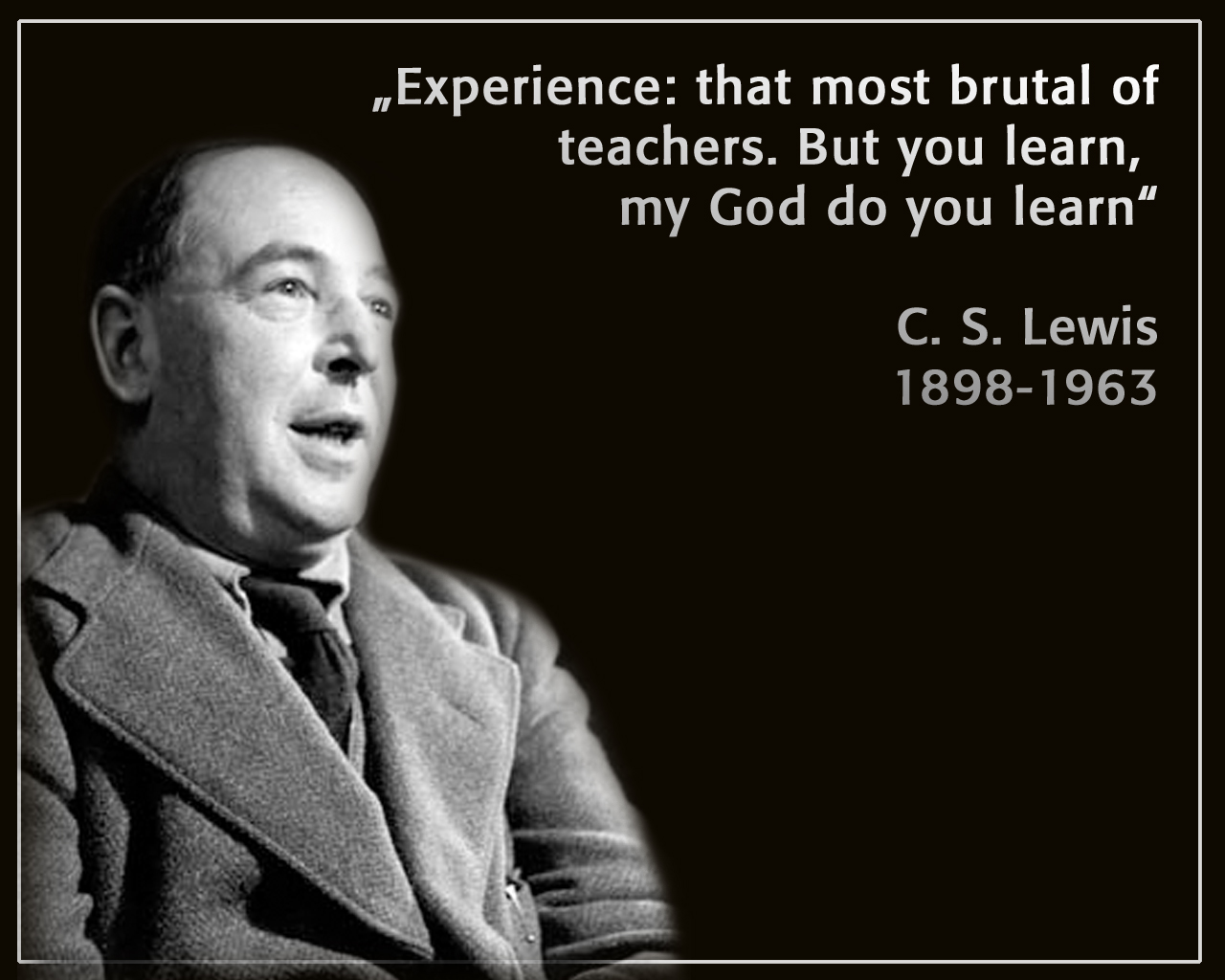
C. S. Lewis, Sigurdur Jonsson, Flickr

Photo Credit: C. S. Lewis, Sigurdur Jonsson, Flickr

Empowerment is vital for effective leadership. It is core to most of our relationships…from teaching, to parenting, to leading.

Leading People to Not Need Us

In discussing love and giving, C.S. Lewis implicitly engages the practice of empowerment. Lewis writes:

The proper aim of giving is to put the recipient in a state where he no longer needs our gift. We feed children in order that they may soon be able to feed themselves; we teach them in order that they may soon not need our teaching.”

Celebrating Growth toward Independence

This principle is not only essential for effective parenting or teaching, it is also essential for effective leading. It raises a heart-searching question for us as leaders: Are we leading our people to dependency on our leadership, or are we leading them to a place of independence and interdependence?

Recognizing Leader Struggles Along the Way

Organizational leaders who hunger for power and position will have difficulty leading followers to a place of independence. Organizational leaders who struggle with personal insecurity will struggle to free followers to this place as well.

Secure and follower-focused leaders recognize that it is a win for both their followers and their organizations to create pathways where leaders may be both developed and empowered for service.

Finding the Reward of Empowerment

Lewis continues to press his argument:

Thus a heavy task is laid upon the Gift-love. It must work towards its own abdication. We must aim at making ourselves superfluous. The hour when we can say ‘They need me no longer’ should be our reward.”

All too often, our saying “they need me no longer” is viewed as a threat rather than a reward. But true love—love that holds the importance of others and their goals alongside our own goals—will lead in such a way that both leader and follower values, goals, aspirations, and dreams may be pursued.

Developing and Deploying Emerging Leaders

In reality, leaders who get the concept of developing and deploying their people do not work themselves out of a job, for such leaders are constantly creating new opportunities for new developing leaders. Great leaders create space for others to flourish. Great leaders identify potential, develop this potential, and release this potential into new roles and opportunities.

Leadership development does not need to be a zero sum game. Thriving organizations and entrepreneurial communities benefit from a regular flow of developed and empowered leaders released into new opportunities.

_______________________________

How are you wired as a leader around these themes? Do you tend to hold onto authority over others, or are you wired to identify, develop, and release talent in the cause of your organization’s mission? Great leaders empower their people!

6 Characteristics of Organizations with Vision

mind_scratch, Ultima visión, Flickr

Photo Credit: mind_scratch, Ultima visión, Flickr

In a previous post, I highlighted the importance of Leading from the Front with Vision. Focusing on why vision matters, Burt Nanus provides a list of characteristics of organizations with and without vision. Here is a summary of these characteristics:

Organizations with Vision

Organizations without Vision

  • Opportunity-Driven
  • Focused on Change
  • Progressing toward Goals
  • Oriented Strategically
  • Focused on Long-Term Results
  • Proactive
  • Problem-Driven
  • Focused on Stability
  • Focused on Past Performance
  • Oriented Tactically
  • Focused on Short-Term Results
  • Reactive

An orientation toward change, pursuing opportunities, working toward goals, focusing strategically, paying attention to long-term interests, and being proactive tend to go along with visionary focus.

Based on these characteristics, are you embedded in an organization with or without vision? If you are leader, are you guiding your organization with vision?