C.S. Lewis on Empowerment — Exploring Leadership Development

C. S. Lewis, Sigurdur Jonsson, Flickr

Photo Credit: C. S. Lewis, Sigurdur Jonsson, Flickr

Empowerment is vital for effective leadership. It is core to most of our relationships…from teaching, to parenting, to leading.

Leading People to Not Need Us

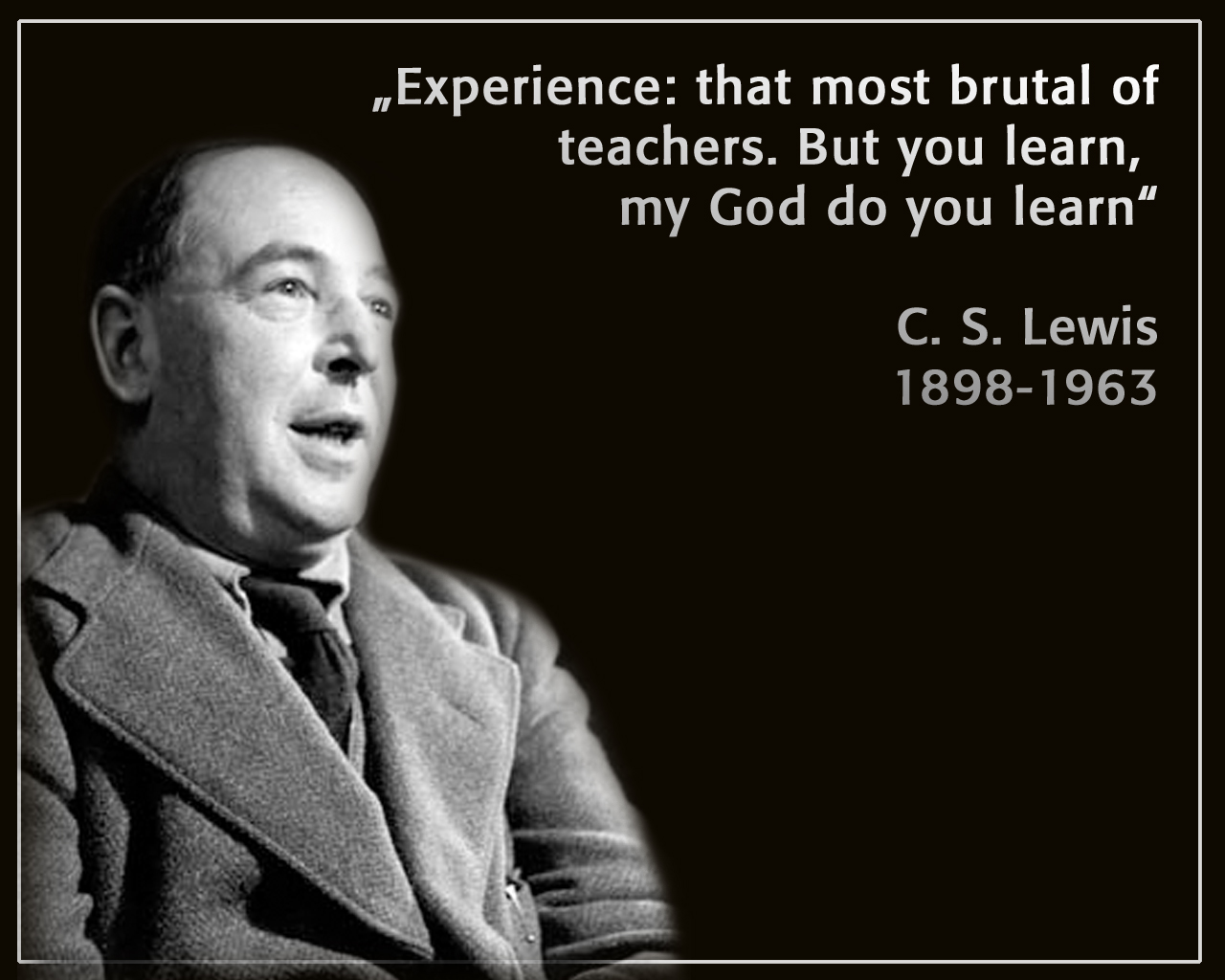
In discussing love and giving, C.S. Lewis implicitly engages the practice of empowerment. Lewis writes:

The proper aim of giving is to put the recipient in a state where he no longer needs our gift. We feed children in order that they may soon be able to feed themselves; we teach them in order that they may soon not need our teaching.”

Celebrating Growth toward Independence

This principle is not only essential for effective parenting or teaching, it is also essential for effective leading. It raises a heart-searching question for us as leaders: Are we leading our people to dependency on our leadership, or are we leading them to a place of independence and interdependence?

Recognizing Leader Struggles Along the Way

Organizational leaders who hunger for power and position will have difficulty leading followers to a place of independence. Organizational leaders who struggle with personal insecurity will struggle to free followers to this place as well.

Secure and follower-focused leaders recognize that it is a win for both their followers and their organizations to create pathways where leaders may be both developed and empowered for service.

Finding the Reward of Empowerment

Lewis continues to press his argument:

Thus a heavy task is laid upon the Gift-love. It must work towards its own abdication. We must aim at making ourselves superfluous. The hour when we can say ‘They need me no longer’ should be our reward.”

All too often, our saying “they need me no longer” is viewed as a threat rather than a reward. But true love—love that holds the importance of others and their goals alongside our own goals—will lead in such a way that both leader and follower values, goals, aspirations, and dreams may be pursued.

Developing and Deploying Emerging Leaders

In reality, leaders who get the concept of developing and deploying their people do not work themselves out of a job, for such leaders are constantly creating new opportunities for new developing leaders. Great leaders create space for others to flourish. Great leaders identify potential, develop this potential, and release this potential into new roles and opportunities.

Leadership development does not need to be a zero sum game. Thriving organizations and entrepreneurial communities benefit from a regular flow of developed and empowered leaders released into new opportunities.

_______________________________

How are you wired as a leader around these themes? Do you tend to hold onto authority over others, or are you wired to identify, develop, and release talent in the cause of your organization’s mission? Great leaders empower their people!


Servant Leadership and #GLS14

Jesus Washing Feet, Fulbourn St. Vigor, Steve Day, Flickr

Photo Credit: Jesus Washing Feet, Fulbourn St. Vigor, Steve Day, Flickr

The 2014 Global Leadership Summit, put on by the Willow Creek Association, is taking place yesterday and today (August 14-15). Although I’m not present at the conference, I’m following key trending insights, particularly on Twitter (#GLS14).

Leadership and the Introvert

There are several takeaways from Day One. Bill Hybels shared key lessons in his opening session. Susan Cain’s reminder of the presence and importance of introverts in our organizations was also a welcome addition to the public leadership discourse.

Susan Cain called us to “remember that one-third of your workforce is probably introverted,” that “most introverts are deeply passionate about a few things,” and that “they are leaders because they were passionate first.”

Patrick Lencioni on Servant Leadership

While the reports coming out throughout the first day were many, I especially appreciated the themes Patrick Lencioni addressed. Here are a few key tweets from Lencioni session:

  • “Leaders sacrifice themselves for the good of others.”
  • “If we’re doing it for ourselves, we’re going to leave a trail of tears behind.”
  • “If you’re not interested in developing yourself, don’t be a leader.”
  • “The best reason for someone to become a leader is to sacrifice themselves for the good of others.”
  • “Most people don’t really want to change the world, thy want to become known as the person who changed the world.”
  • “I’m tired of hearing about servant leadership because I don’t think there’s any other kind of leadership.”
  • “Servant leadership is the only leadership. All else is economics.”

Servant Leadership for the Good of Others

I’m passionate about servant leadership. Though I would not express this quite the same as Lencioni (I like hearing more about servant leadership!), the point is well-taken. Leadership at its core is about service. It is about valuing others. It is about focusing on their needs. It is about sacrificing for their good of those we lead.

Servant Leadership Next Steps

While this post is just a quick highlight of some of the servant leadership themes raised at #GLS14, some may wish to dig a bit deeper. Here is one of my journal articles on the topic, providing both a biblical and research-based frame for engaging servant leadership. Servant leadership is not only an ethical approach to leadership—it is also effective!

Enjoy the article, and enjoy Day 2 of #GLS14

Macro Change through Micro Improvements

Sunny Pebbles, Laura Thorne, Flickr

Photo Credit: Sunny Pebbles, by Laura Thorne, Flickr

I read an interesting article in The Economist recently. It is entitled Little Things that Mean A Lot, and the author argues that businesses should aim for lots of small wins that add up to something big.

New Routes to Organizational Success

The article focused primarily on the role of analyzing large pools of data in order to identify opportunities for incremental improvement. One illustration came from UPS. In America, there are some 60,000 UPS vans that drive 100 plus miles each day. If through data analysis UPS can find ways to reduce driving by 1 mile per day for each van, it is estimated that the company would save close to $50 million in fuel and related costs each year.

Although most of us are not looking for $50 million in small wins for our organizations, the new market realities in our world are calling for most organizations (for profit and nonprofit alike) to look for both big and small opportunities. Most of the “big wins” have already been identified since the beginning of the Great Recession. It is now time for organizations to up their game in finding the “small wins.”

Building a Mountain with Pebbles

One of the quotes in the article expresses the need in this manner: “It is about building a mountain with pebbles.” While most of us would simply prefer to find the mountain, the new realities of our world often translate to using a both-and approach to organizational improvements.  We need to have an explorer mindset, looking for new mountains of opportunity. We also need to have the mindset of the statistician, looking for macro opportunities within the micro dimensions of business and organizational life.

Explorers and Statisticians

How are you pursuing big-wins through small opportunities? How are you maintaining the entrepreneurial mindset of the explorer, while also seeing the details as the researcher or statistician would? This requires us to partner well with others on this journey. This requires us to build our teams with a diversity of expertise so that we can pursue growth and opportunity on both fronts.

Enjoy the journey, and keep your eyes open for macro change through micro improvements.

6 Characteristics of Organizations with Vision

mind_scratch, Ultima visión, Flickr

Photo Credit: mind_scratch, Ultima visión, Flickr

In a previous post, I highlighted the importance of Leading from the Front with Vision. Focusing on why vision matters, Burt Nanus provides a list of characteristics of organizations with and without vision. Here is a summary of these characteristics:

Organizations with Vision

Organizations without Vision

  • Opportunity-Driven
  • Focused on Change
  • Progressing toward Goals
  • Oriented Strategically
  • Focused on Long-Term Results
  • Proactive
  • Problem-Driven
  • Focused on Stability
  • Focused on Past Performance
  • Oriented Tactically
  • Focused on Short-Term Results
  • Reactive

An orientation toward change, pursuing opportunities, working toward goals, focusing strategically, paying attention to long-term interests, and being proactive tend to go along with visionary focus.

Based on these characteristics, are you embedded in an organization with or without vision? If you are leader, are you guiding your organization with vision?

The Priority of Potential — Spotting Talent for our Organizations

Potential!, Miles Goodhew, Flickr

Photo Credit: Potential!, by Miles Goodhew, Flickr

In a previous post I highlighted 8 Core Leadership Abilities. In the same HBR article, Claudio Fernández-Aráoz engages the important theme of how to spot talent in the 21st century.

A History of Talent Searching

Over the centuries and years, diverse approaches have emerged for identifying leadership and managerial talent. Fernández-Aráoz identifies this progression around four movements:

Focus on Physical Attributes — Those who were fittest, healthiest, and strongest.

Focus on Intelligence and Experience — Those who were the most intelligent, most experienced, and those with the best past performance.

Focus on Testing for Competencies— Those who possess the right set of characteristics and skills associated with predicted job performance.

Focus on Potential  — Those who are ready to engage the VUCA environment of Volatility, Uncertainty, Complexity, and Ambiguity.

Why Potential

In the VUCA world of increased volatility, uncertainty, complexity, and ambiguity, there are new demands on prospective talent. Fernández-Aráoz discusses the factors of globalization, demographic shifts, and challenges to the talent development pipeline. The talent development pipeline is significantly stretched due to increased competition in this changing environment of the 21st century. These factors are forcing organizations to focus on identifying potential (not just track-records of success), and then developing and retaining this talent in the years ahead.

What to Look for When Looking for Potential

So, how is potential spotted? What qualities are the hallmarks of such potential? Fernández-Aráoz identifies the following hallmarks for spotting talent and potential in the 21st century:

Motivation — “…a fierce commitment to excel in the pursuit of unselfish goals.”

Curiosity — “…a penchant for seeking out new experiences, knowledge, and candid feedback and an openness to learning and change.”

Insight — “…the ability to gather and make sense of information that suggests new possibilities.”

Engagement — “…a knack for using emotion and logic to communicate a persuasive vision and connect with people.”

Determination — “…the wherewithal to fight for difficult goals despite challenges and to bounce back from adversity.”

How to Develop those with Potential

Because spotting potential is quickly becoming the new norm, developing this potential talent in our organizations is becoming the highest priority. How are motivation, curiosity, insight, engagement, and determination built upon so that individuals with potential translate into individuals with performance?

Fernández-Aráoz identifies the priority of stretch development. On this point Fernández-Aráoz notes, “when it comes to developing executives for future leadership assignments, we’re constantly striving to find the optimal level of discomfort in the next role or project, because that’s where the most learning happens.” Finding stretching assignments, where those with potential don’t immediately have all the answers, is one of the chief pathways in moving individuals from potential to performance.

______________________________

How are you identifying potential around you? How are you developing this potential into performance?

Cease Striving — Calling Leaders to Rest

Rest Here, Esther Simpson, Flickr

Photo Credit: Rest Here, by Esther Simpson, Flickr

“Cease striving and know that I am God.” – Ps. 46:10

Getting Things Done

As leaders, we tend to be achievers. We tend toward making things happen… toward work… toward activity… toward doing… toward performance… toward striving.

Of course, these characteristics have some very positive dimensions to them. Things tend to get done. Teams tend to perform. Organizations tend to run well. But can there be too much of a good thing when it comes to this leadership tendency?

Too Much of a Good Thing…Cease Striving

For Christian leaders, it is important to remember that leadership does not just happen by human effort and work. The reality of God’s existence changes the leadership equation for our lives as leaders and for our organizations. Christians believe in a God who does not simply sit back and watch His people work. Rather, Christians believe in a God who not only watches, but He is also engaged in the work itself.

The verse quoted above calls us to be still, to cease striving, and to know that God is God (Ps. 46:10). We are called to trust that God is at work even when we are not. We are called to trust that God is in control even when we feel we are not. We are call to take the attention off of ourselves and our striving, and transfer that attention to God who is actively engaged in our lives, organizations, and world.

He Gives to His Beloved Even as They Sleep

Beyond Psalm 46, there are many other passages in the Bible that remind us as leaders that striving is not always the answer. Sometimes the answer is resting rather than striving, because God is at work even when we are not.

One of my favorite passages on this point is Psalm 127:2…

It is vain for you to rise up early, To retire late, To eat the bread of painful labors;
For He gives to His beloved even in his sleep
.”

What a powerful reality. God gives to us, even when we sleep. God works while we rest.

Some versions translate the end of this verse as “he grants sleep to those he loves.” The reality is both concepts are true and powerful. He gives us sleep. He gives to us and our communities while we sleep.

Resting in the One Who Works

As leaders who work hard during the day, we should take time to “cease striving” and to rest. We should cease our work and go to sleep in peace knowing that:

  1. God grants sleep to his beloved, and
  2. Even in our sleep, God is still working on behalf of those who are resting in Him.

Good Theology = Good Rest

What powerful theology for those in need of rest. As leaders, we need to be able to shut down and rest. We need to be shut down and spend time with friends and family. We need to be able to shut down and sleep.

Leaders who believe the entire story of leadership success is written by their own effort will struggle to find the rest and restoration they and their people need. As we trust that God is at work, even when we are not, then the rest we need as leaders will be found by relying on the one who graciously works on our behalf.

Are you finding your rest in the Lord? Are you waiting on the one who is able to work for you? Are you finding refreshment by resting in the one who gives to His people even while they sleep?

Visionary Change with a Plan: Remembering the Importance of Effective Management in the Change Process

Change, SomeDriftwood, Flickr

Photo Credit: Change, SomeDriftwood, Flickr

Change agendas often fail due to good visions that lack a thoughtful plan. I observed this in some of my previous work with smaller nonprofits. In these contexts, leadership energy was devoted to generating new ideas and visions for the future but there was not sufficient managerial energy devoted to plans that would support the enactment of vision.

Doing things Right

Peter Drucker noted that management is doing things right while leadership is doing the right things. Although leadership is focused on doing the right thing and casting appropriate visions for change, it is often management that focuses on doing things right. Change initiatives that are launched but not sustained often fail due to lack of effective planning and lack of doing things the right way.

Consistent with Drucker’s observations, John Kotter highlights the central functions of leaders and managers. Leaders focus on setting direction, aligning people, and motivating people. In contrast to this, managers plan and budget, organize and staff, and control and problem solve. Successful change efforts are not focused on only one of these lists, but rather both. Successful change efforts are not focused on leadership or management, but rather effective leadership and effective management.

Change Initiation and Change Implementation

Since leadership tendencies of setting direction often initiate change agendas, it is easy for change failure to occur in the absence of management. Without leadership, change fails due to lack of initiation. Without management, change fails due to lack of implementation.

What change vision are you pursuing as a community? Are you pursuing both effective initiation and implementation? How are you pursuing the change visions with a plan?

Why I Blog: Fostering Healthy Leadership

Be the Change, Feggy Art, Flickr

Photo Credit: Be the Change, Feggy Art, Flickr

“Leadership is one of the most observed and least understood phenomena on earth.”
– James MacGregor Burns

James MacGregor Burns’ quote resonates with most of our experiences. We see leadership occurring all around us, but rarely take time to reflect in a systematic way on what makes this leadership helpful or unhelpful—effective or ineffective. Further complicating our observations, at times we see people leading well who have no formal positions of leadership within our organizations, and at other times we see people in positions of leadership who really are not providing the necessary leadership direction for our organizations as we move into the future.

Lingering Questions

And so we come back to Burns’ comments: Leadership is one of the most observed and least understood phenomena on earth. But must it be this way? Is leadership simply a mysterious reality? Is it something that we simply know when it is going well or poorly, but will never really understand what makes it work? Or might we be able to provide some basic descriptions of the form and shape of good, helpful, and effective leadership? Might we be able to get at some minimum factors that characterize both what helpful leaders and leadership look like?

Leadership Can Be Learned

Part of my vocational calling is providing thoughtful responses to such questions. I believe leadership can be described and studied. I believe it can be learned. Not every person is wired to be a capital “L” Leader. However, just about everyone embedded in an organization, group, or family can grow in and learn how to positively influence and guide the people around them.

This is the heart behind why I’ve started blogging at purposeinleadership.com. Although I’ve been observing leaders in action most of my life, I’ve spent the last 15 years in focused study on the topic through various degree programs, organizational roles, research agendas, and teaching opportunities. I want to start sharing some of these lessons learned with a wider audience.

A Passion for Ridding the World of Bad Leadership

Harvard Business Review’s editorial mission is “to rid the world of bad management.” I have a similar passion in the area of leadership. Though I won’t be able to personally rid the world of bad leadership, I’d love to make a dent in this ambitious agenda. I want to spread a message…

  • …that leadership is more about serving others than being served,
  • …that people are the priority even in profit-driven sectors,
  • …that leaders need to create organizations and societies that are not only productive, but also are fit for human beings,
  • …that purpose in leadership is of central importance,
  • …that leadership is vital in organizations that create value for those they serve,
  • …that people will endure great hardship and sacrifice when they believe in what they are doing and feel their work and leadership has meaning and purpose,
  • …that leaders have a God-given responsibility to care for the people they lead,
  • …that core leadership characteristics and behaviors can be described,
  • …that leadership is vital in working toward human flourishing in organizations and societies.

Thanks for Joining Me in this Pursuit

Although I don’t believe that everything rises or falls on leadership, I do believe that the pursuit of effective and healthy models of leadership is a first-order priority in our day.

Thanks for joining me on this journey toward good, helpful, and effective leadership. Our organizations and the people we serve as leaders deserve our very best!

Leading from the Front … Leading with Vision

Leadership vs. Management, on Flickr

Photo Credit: Leadership vs. Management, on Flickr

Leading from the front requires leading with vision!

Engaging the question, “Why does vision matter?” Burt Nanus offers the following reflection:

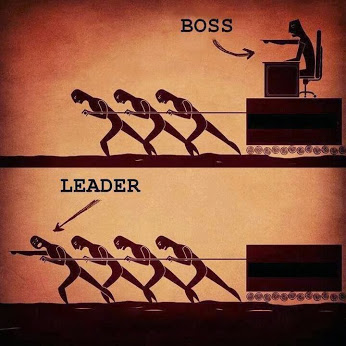
Vision is the main tool leaders use to lead form the front. Effective leaders don’t push or production their followers. They don’t boss them around or manipulate them. They are out front showing the way. The vision allows leaders to inspire, attract, align, and energize their followers—to empower them by encouraging them to become part of a common enterprise dedicated to achieving the vision.”

In this brief post I encourage you to consider whether you’re leading from the front or whether you’re leading from behind. Are you calling people to an inspiring vision of what can be, or are you pushing and prodding followers to do what they really are not committed to already?

Vision helps to motivate followers intrinsically rather than extrinsically. Vision helps to lead from the front!

Tolstoy on Leadership

Leo Tolstoy, Wikipedia

Photo Credit: Leo Tolstoy, Wikipedia

I recently came across again an interesting essay by Tolstoy in The Leaders Companion by Wren. Tolstoy’s treatment of rulers and generals as historys slaves started the journey and caught my attention. The following excerpt of Tolstoy seems to capture the heart of the argument he makes:

In historic events, the so-called great men are labels giving names to events, and like labels they have but the smallest connection with the event itself. every act of theirs, which appears to them an act of their own will, is in an historical sense involuntary and is related to the whole course of history and predestined from eternity.”

Tolstoys Challenge to Leader Autonomy

In terms of my response to this, on the one hand I want to quickly dismiss this as an overly deterministic view of leaders embedded in history. On the other hand, when I sit with this a bit longer, I find it helpful to consider Tolstoy’s challenge to look beyond the leader as individual to the larger system of which the leader is part.

Factors beyond the Leader

There are not only leaders—the “great men” to which Tolstoy refers—there are also followers. On this point of followers Tolstoy writes, “It was necessary that millions of men in whose hands lay the real powershould consent to carry out the will of these weak individuals [the great men], and should have been induced to do so by an infinite number of diverse and complex causes.”

In addition to leaders and followers, as Tolstoy alludes, there are “an infinite number of diverse and complex causes” that make up the organizational, societal, and global contexts within which situations of historic magnitude are carried out. Leaders are not islands unto themselves—they are surrounded by followers and wider systems that influence them whether they recognize this influence or not.

The Limits of Autonomy for Prominent Leaders

Although I do not immediately like the overly deterministic interpretation of history, Tolstoy’s challenge is an important one to consider. His primary argument is that those of higher social standing—and those of more prominent leadership responsibility like the Napoleons and Alexanders of history—have limited personal determination that may be exerted outside of the “predestination and inevitability” of their actions.

Public Leadership in Historical Perspective

This goes against the grain of contemporary notions of leaders setting their own course. However, it is accurate to acknowledge that when a leader has a substantially broad scope of leadership responsibility, there are exponentially more factors that influence the decision making processes of that leader. Many of these factors are outside of the leader’s own personal wishes and determination. As Tolstoy notes, even when leaders appear to “act of their own will,” the reality may often be that leader decisions become involuntary “in an historical sense.”

____________________

What do you think of Tolstoy’s argument about public and historic leaders? Do individuals actually lose some freedom, autonomy, and self-determination when they assume large-scale and global leadership responsibilities? Have you observed this as you read about large-scale and/or historic leadership?